
Electronic shifting has transformed how cyclists interact with their drivetrains. What began as a professional racing technology has become accessible to enthusiasts seeking precise, reliable gear changes on every ride.
How Electronic Shifting Works
Unlike mechanical systems that rely on cables and springs, electronic derailleurs use small motors controlled by wireless or wired signals from shift buttons. When you press a shifter paddle, a signal travels to the derailleur, which precisely positions itself using a servo motor. The result: instant, consistent shifts regardless of cable stretch, frame flex, or environmental conditions.
Shimano Di2: The Pioneer
Shimano introduced Di2 (Digital Integrated Intelligence) in 2009, revolutionizing road cycling. The current flagship, Dura-Ace R9200, represents 15 years of refinement.
Key Features of Shimano Di2
- Semi-wireless design: Wireless shifters communicate with wired derailleurs through a central junction box
- Synchro Shift: Automatic front shifting when rear derailleur reaches specific gears
- Customizable buttons: Configure shift logic and button assignments via the E-TUBE app
- Battery life: Up to 1,000km on a single charge
Shimano Groupset Hierarchy
- Dura-Ace Di2 (R9200): Lightest, fastest shifting, pro-level performance
- Ultegra Di2 (R8100): Near-identical functionality at lower weight penalty
- 105 Di2 (R7100): Entry-level electronic, brings technology to more riders
- GRX Di2: Gravel-specific electronic shifting with clutch rear derailleur
SRAM AXS: Fully Wireless Innovation
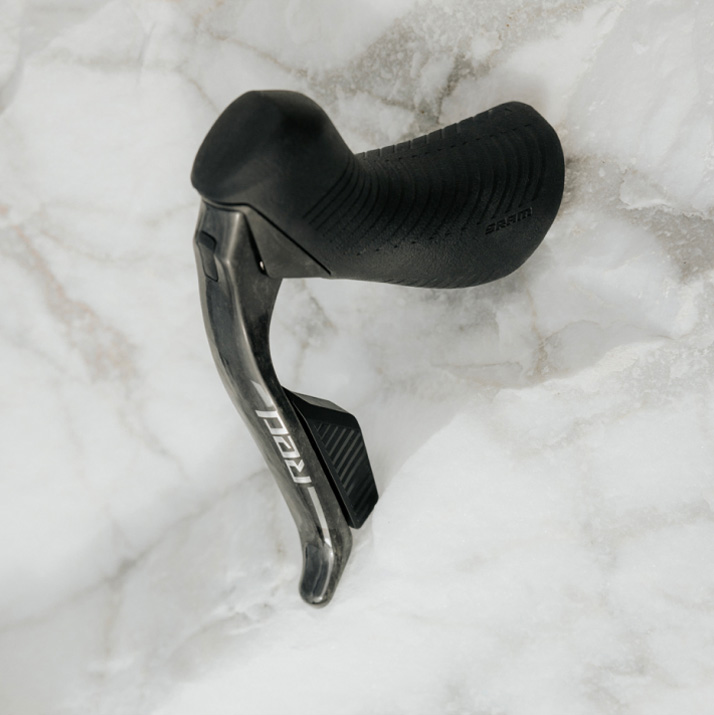
SRAM took a different approach with their AXS (pronounced “access”) system, going fully wireless from the start. Each derailleur has its own battery, eliminating all wiring between components.
Key Features of SRAM AXS
- Fully wireless: No cables or wires between components whatsoever
- Interchangeable batteries: Pop-out batteries work across road, gravel, and mountain groups
- Sequential or compensating shift: Multiple shift logic options via AXS app
- Universal compatibility: AXS components across different groups can work together
SRAM Road Hierarchy
- Red AXS: Lightest electronic groupset available, 150g lighter than competitors
- Force AXS: Performance-focused with modest weight penalty
- Rival AXS: Entry-level wireless electronic shifting
- XPLR AXS: Gravel-specific with wide-range cassette compatibility
Electronic vs. Mechanical: Making the Choice
Advantages of Electronic Shifting
- Consistent performance: No cable stretch or adjustment needed over time
- Precise shifts: Motor-driven positioning is identical every time
- Easier shifting: Light button press vs. mechanical lever throw
- Customization: Smartphone apps allow personal configuration
- Auto-trim: Front derailleur automatically adjusts to prevent chain rub
Considerations
- Battery management: Must charge periodically (but battery life is excellent)
- Cost: Electronic groups cost 30-50% more than mechanical equivalents
- Complexity: Requires firmware updates and app familiarity
- Field repair: Mechanical issues may require shop visit vs. trailside cable fix
Which System Should You Choose?
Both Shimano Di2 and SRAM AXS deliver exceptional performance. Your choice often comes down to ecosystem preference and specific features:
Choose Shimano Di2 if: You value proven reliability, prefer hood-based shift buttons, or are already invested in Shimano wheels and components.
Choose SRAM AXS if: You want fully wireless simplicity, appreciate paddle-style shifters, or ride multiple bikes and want to swap batteries easily.
The Future of Shifting
Electronic shifting continues evolving. Expect to see improved battery life, even lighter components, and deeper integration with GPS computers and power meters. Both Shimano and SRAM are developing predictive shifting that uses terrain data to automatically select optimal gears.
Whether you choose Di2 or AXS, electronic shifting represents a meaningful upgrade for serious cyclists. The precision, reliability, and customization options enhance every ride—from daily commutes to competitive racing.




Stay in the loop
Get the latest cycle tech trends updates delivered to your inbox.