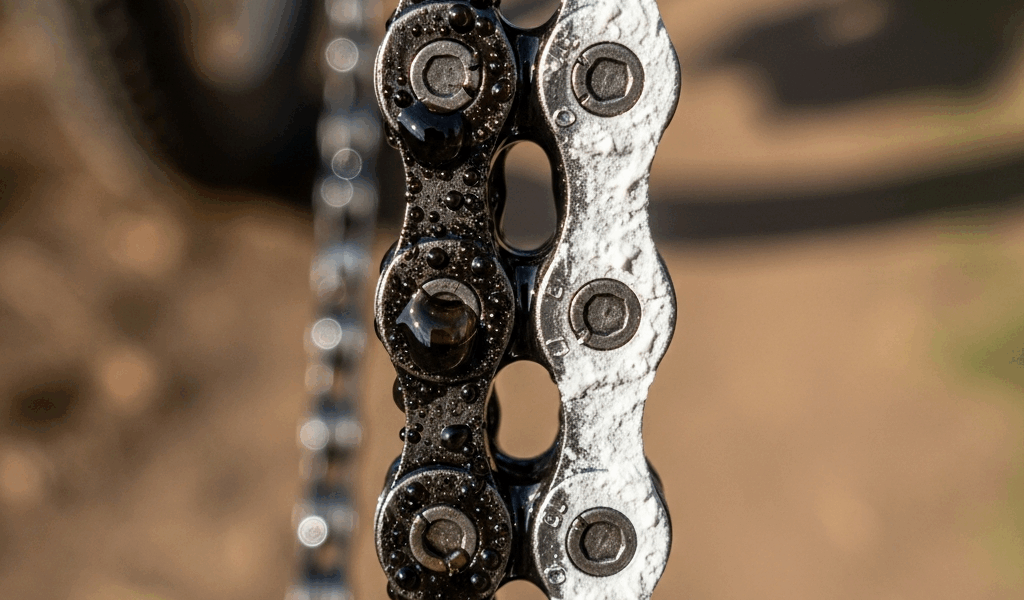
Chain Wax vs Wet Lube at a Glance
Chain lubrication has gotten complicated with all the sponsored content and conflicting advice flying around. Two seasons, three chains, one destroyed cassette, and more hours standing over a crock pot than I care to admit — that’s what this comparison actually cost me. Most articles won’t give you a straight answer. This one will.
Quick context before the numbers: everything below comes from my own testing on a 2022 Shimano 105 groupset and a SRAM Rival setup. Dry gravel, soaking wet winter commutes in the Pacific Northwest, everything in between.
| Factor | Chain Wax | Wet Lube |
|---|---|---|
| Application effort | High — full strip and soak required | Low — 30 seconds, done |
| Reapplication frequency | Every 200–300 km dry | Every 100–150 km, sooner in rain |
| Dirt attraction | Very low | High — picks up everything |
| Wet weather performance | Poor — washes out fast | Strong — formulated to stay |
| Cost per application | ~$0.40 (Silca Hot Melt blend) | ~$0.80–$1.20 (Muc-Off Wet, 120ml) |
| Drivetrain wear reduction | Excellent — measurably lower wear | Moderate — depends on cleaning habits |
That wear reduction column catches people off guard every time. Chain wax — applied correctly — sets into a dry, hard coating inside the chain rollers. No sticky film on the outside. Nothing for grit to grab onto. Wet lube stays tacky by design, which helps it survive rain, but that same tackiness works like flypaper for road debris, sand, brake dust, whatever’s on the pavement that day.
When Wax Is the Clear Winner
Dry conditions. Full stop.
Gravel riding in summer, road centuries in July and August, racing on courses where rain isn’t anywhere in the forecast — wax isn’t just better in those situations. It’s operating in a completely different category. I switched my dedicated gravel bike to a hot wax setup before a 200km event last September, then checked chain wear at the end of the season. Virtually no measurable elongation. That same chain on my wet-lubed commuter bike? At 0.5% wear after roughly identical mileage.
The mechanics aren’t complicated. A waxed chain gives abrasive particles nothing to stick to — grit lands on the surface and falls off. Grit that lands on a wet-lubed chain gets pulled into the metal with every pedal stroke. Over hundreds of kilometers, that difference adds up in ways your cassette will eventually make very clear.
Gravel racing specifically is where wax built its reputation. Silca’s Super Secret Chain Lube and Squirt Wax are both legitimate options for riders who don’t want to go full crock pot — but the real performance gains come from immersion waxing. Fully submerging a stripped, degreased chain in molten paraffin-based wax. I run a blend of Silca Hot Melt Wax with a small percentage of Molten Speed Wax additive, heated in a $22 Crock-Pot from Target. Sounds fussy. It is fussy. The results justify it for anyone serious about component longevity.
Drivetrain costs are real, and that’s worth saying plainly. A replacement Shimano 105 cassette runs $65–$90. If waxing extends your chain and cassette life by even 30%, that’s actual money back in your pocket over a season.
When Wet Lube Is the Better Choice
Rain changes everything. Wax and water are not friends — I found that out the hard way on a 90km ride last November.
An unexpected downpour, a freshly waxed chain, and roughly 40 minutes of sustained rain later, I was listening to grinding and squealing where smooth and silent used to be. The wax coating that performs beautifully in dry conditions simply doesn’t bond aggressively enough to survive prolonged water exposure. It washes out. And a chain running dry isn’t just annoying — it’s actively destroying itself and your cassette teeth with every rotation.
Wet lube exists precisely for this. Products like Muc-Off Wet, Finish Line Wet, or Smoove Universal Chain Lube stay put in the rain. Heavier base oils, formulated specifically to resist water washout. For commuters riding through full seasons, multi-day touring cyclists, or anyone in genuinely wet climates — wet lube isn’t a compromise. It’s the correct tool for the job.
The other argument for wet lube is honestly just convenience. Not everyone wants to manage a waxing setup, and that’s a completely valid position. One bike, four rides a week, no interest in a 20-minute chain-preparation process every few hundred kilometers — wet lube is practical in a way wax simply isn’t. Squirt a few drops on the chain, backpedal, wipe the excess, ride. That’s the whole process.
Multi-day touring is another situation where wet lube wins on pure logistics. A 30ml bottle of Muc-Off fits in a jersey pocket and reapplies at a cafe stop. The crock pot setup — not so portable.
The Maintenance Reality — What Nobody Tells You
Probably should have opened with this section, honestly.
Hot wax immersion is not the “apply and forget” system some YouTube tutorials make it look like. Before you wax a chain for the first time, it needs to be completely stripped of factory grease — isopropyl alcohol soak in a mason jar, then a second soak with mineral spirits, followed by a full dry. New Shimano and SRAM chains come packed in a rust-preventing grease that is not compatible with wax. Skip the degreasing step and you get a compromised wax job that fails early. Don’t make my mistake — I skipped a proper dry cycle on my first attempt, the chain felt fine for one ride, and by the second it was squeaking like a shopping cart with a bad wheel.
The actual waxing process runs about 20 minutes once your setup is ready. Melt the wax block in the crock pot, drop the chain in, let it soak 8–10 minutes, pull it out on a coat hanger hook, hang it to harden for 20 minutes, reinstall. It works. It’s just not fast.
Wet lube maintenance is honest in a different direction. The lube itself — 30 seconds. But if you’re not cleaning your drivetrain every two or three rides, you’re building up a layer of lube-embedded grit that acts like grinding paste on your cassette and chainring teeth. Fast to apply, yes. The cleaning is where it collects the debt.
Neither system is zero-effort. Don’t let anyone tell you otherwise.
The Verdict — Match Your Riding to Your Lube
Here’s where I land after two years of actually testing this rather than just reading about it.
- Dry road and gravel cyclists — go wax. The drivetrain longevity benefit is real, the cost per application is lower over time, and a genuinely clean drivetrain is — I’ll say it — satisfying in a way that’s hard to explain until you experience it. Accept the setup process as part of the deal.
- Commuters and wet-climate riders — go wet lube. Muc-Off Wet or Finish Line Wet, clean your chain every few rides, and stop feeling like you’re making a compromise. You’re not. You’re using the right tool.
- Weekend warriors riding mixed conditions — a drip wax product might be the best option, as this riding style requires flexibility above all else. That’s because something like Squirt Wax or Silca Super Secret Chain Lube applies like a wet lube but dries to a wax-like film — meaningfully less dirt pickup than traditional wet lube, no crock pot required. It won’t match full immersion waxing, but it lives comfortably in the middle ground.
Neither product wins universally — that’s the honest answer. Chain wax is better for your drivetrain in the right conditions. Wet lube is better in others. Matching your lubricant to your actual riding environment matters more than chasing whatever gets called “best” in the abstract.
Your chain doesn’t care about the label on the bottle. It cares whether it’s lubricated, clean, and not grinding itself apart. Pick the system you’ll actually stick to — your cassette will figure out the rest.




Stay in the loop
Get the latest cycle tech trends updates delivered to your inbox.