Shimano groupsets have gotten complicated with all the model numbers and tier positioning flying around. As someone who’s run Claris, 105, and Ultegra across different bikes, I learned everything there is to know about what each level actually delivers. Today, I will share it all with you.
That’s what makes understanding the hierarchy endearing to us upgrade-obsessed cyclists — knowing where to spend money and where to save it.
What a Groupset Is
But what is a groupset? In essence, it’s the collection of shifting and braking components that make your bike go and stop. But it’s much more than that.
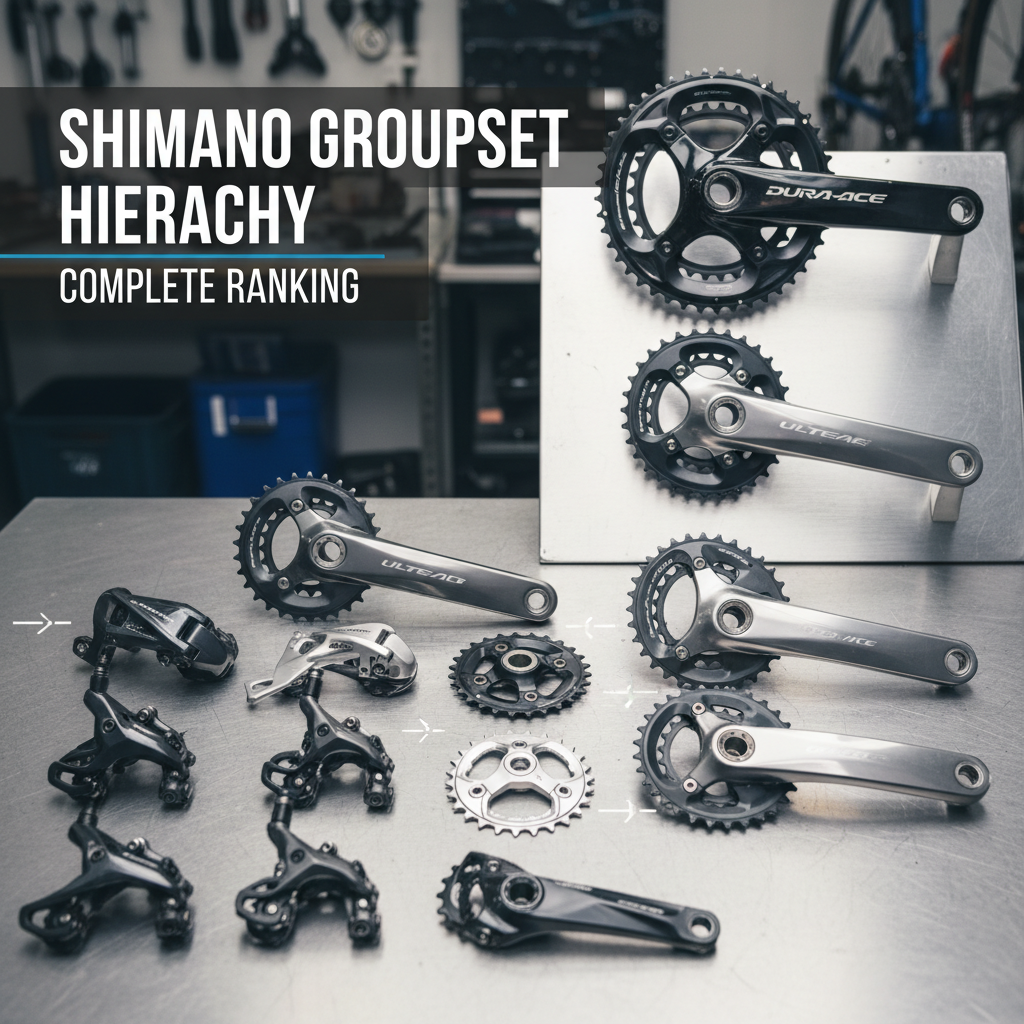
The groupset includes shifters, derailleurs (front and rear), crankset, cassette, chain, and brakes. These components work together as a system. Mixing brands or tiers can cause compatibility issues.
Road Groupset Hierarchy
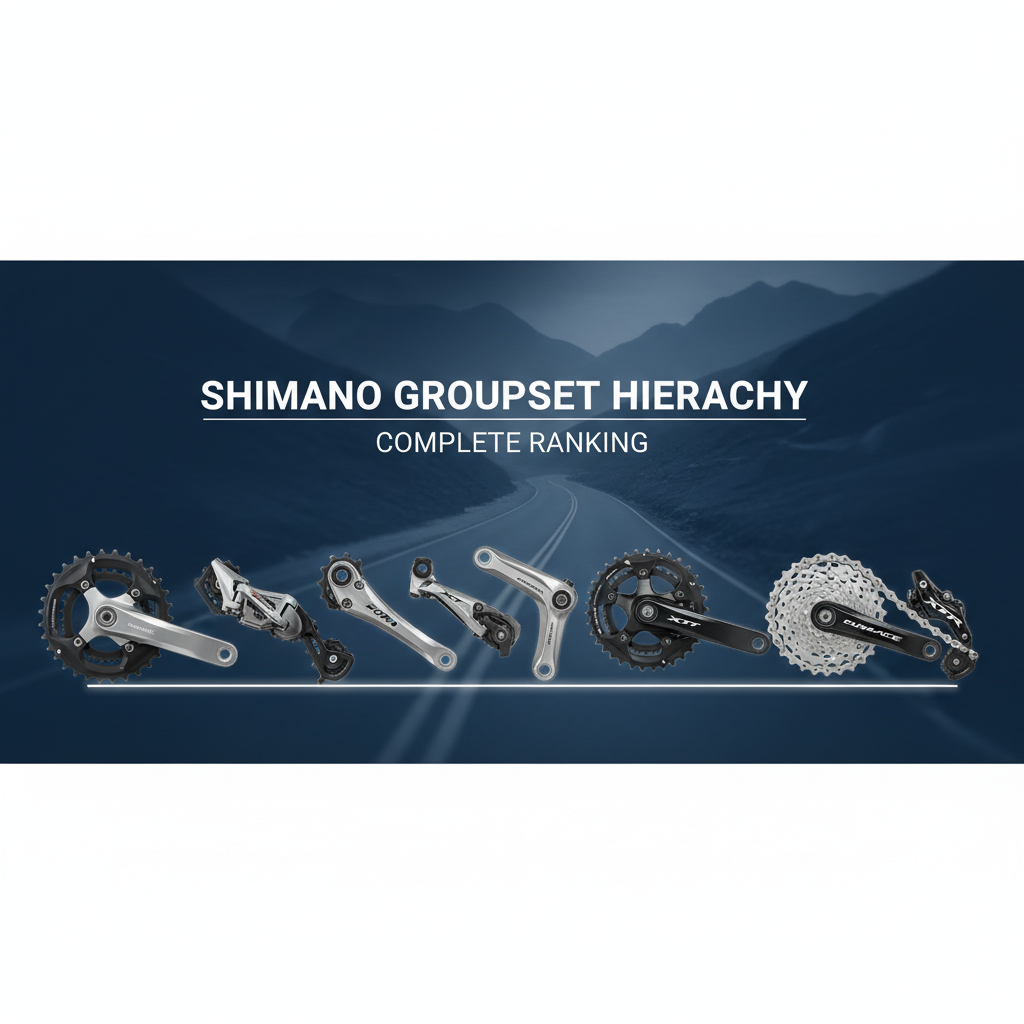
Probably should have led with this section, honestly — here’s the Shimano road lineup from entry-level to professional, with honest assessments:
Tourney: Found on department store bikes. Works, barely. Limited durability and shifting precision. If your bike has Tourney, consider the whole bike entry-level.
Claris (8-speed): Entry point for real road bikes. Functional shifting, adequate braking. I rode Claris for my first 5,000 miles. It worked. Upgrades feel noticeably better.
Sora (9-speed): Incrementally better than Claris. Smoother shifting, slightly lighter. Still entry-level but capable of serious riding.
Tiagra (10-speed): The transition to mid-range. Noticeably better shifting crispness. Ergonomic improvements in lever shape. Many riders stop here happily.
105 (11-speed): This is where quality really arrives. Shimano themselves call it the entry point to racing components. Shifting is crisp and reliable. Weight drops. I’m apparently in the camp that considers 105 the sweet spot — professional-level performance at non-professional prices.
Ultegra (11-speed): Refinement over 105. Lighter, smoother, more durable. The differences are real but incremental. Some racers prefer Ultegra to Dura-Ace for its durability-to-weight ratio.
Dura-Ace (11-speed): The pinnacle. Lightest, smoothest, most expensive. Professional teams use this. Weekend warriors who can afford it use this. The performance gains over Ultegra are marginal; the prestige is real.
Mountain Bike Groupsets
Shimano’s mountain bike hierarchy follows similar logic:
Deore: Entry point for serious mountain biking. Reliable 10 or 11-speed shifting. Handles trail abuse well. Great value.
SLX: Mid-range with excellent performance-to-cost ratio. Shares technology with higher tiers. Many serious riders choose SLX.
XT: High-end without the professional price tag. Lighter, smoother, more refined than SLX. Popular upgrade choice.
XTR: Race-level components. Lightest weight, smoothest action. Professional mountain bikers use this. Very expensive.
Di2: Electronic Shifting
Di2 versions exist for 105 (new), Ultegra, and Dura-Ace. Electronic shifting replaces cables with motors and wires. The shifts are faster, more precise, and require no adjustment as cables stretch (because there are no cables).
Frustrated by cable adjustment on my old bike, I tried a friend’s Di2 setup. The difference is real — every shift is identical, no matter conditions. Whether it’s worth the substantial price premium depends on your tolerance for mechanical maintenance.
Practical Advice
- For beginners: Claris or Sora works fine while you develop. Don’t overspend on groupset before you know what you want.
- For serious recreational riders: 105 is the smart choice. Race-quality performance, reasonable price, long-term durability.
- For racers: Ultegra offers the best performance-per-dollar. Dura-Ace if budget isn’t a constraint.
- For weight obsessives: The weight savings at each tier are real but small. Unless you’re racing for seconds, the money might be better spent elsewhere.
Making the Call
The jump from Claris to 105 is transformative. The jump from 105 to Ultegra is noticeable but incremental. The jump from Ultegra to Dura-Ace is subtle unless you’re extremely sensitive to feel.
Buy the level you can afford without straining. Upgrade when components wear out rather than chasing marginal gains. A well-maintained 105 groupset serves most riders better than a neglected Ultegra setup.