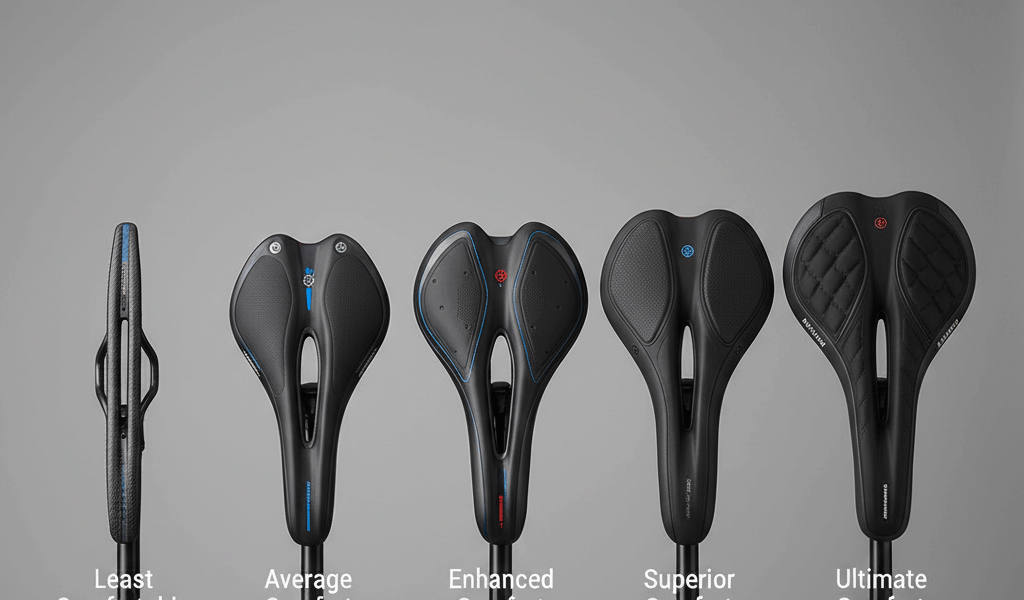
Road bike saddle selection has gotten confusing with all the width measurements and pressure mapping claims flying around. As someone who’s worked through saddle discomfort and finally found what works, I learned everything there is to know about this critical contact point. Today, I will share it all with you.
That’s what makes saddle choice endearing to us long-distance cyclists — getting it right transforms rides from endurance tests to enjoyable miles.
Saddle Anatomy
Probably should have led with this section, honestly — understanding the parts helps evaluate options.
Shell: The foundation. Carbon, nylon, or plastic. Determines shape and flex.
Padding: Foam, gel, or combination. More padding doesn’t always mean more comfort.
Cover: Synthetic or leather. Affects durability and maintenance.
Rails: Connect to seatpost. Steel, titanium, or carbon. Affect weight and vibration damping.
Shape Matters
But which shape works best? In essence, it depends on your body and riding style.
Flat: Works for flexible riders maintaining consistent position.
Rounded: Better for riders who move around more.
Cutout: Relieves pressure on soft tissue. Worth trying if you experience numbness.
Width Reality
I’m apparently in the camp that measures sit bones rather than guessing. Frustrated by saddles that looked right but felt wrong, I got properly measured and finally found comfort.
Width should support sit bones efficiently. Too narrow causes discomfort. Too wide rubs thighs. Many bike shops offer measurement tools. Generally, women’s sit bones measure wider, leading to gender-specific designs.
Padding Types
Foam is lighter and more responsive but may compress on long rides. Gel conforms to shape initially but can feel overly squishy over time. Neither is universally better — preference varies.
Rail Materials
Steel rails are durable but heavier. Titanium offers good shock absorption at lighter weight. Carbon is lightest but most expensive. Match to your priorities and budget.
Positioning
Height, tilt, and fore-aft position all affect comfort. Level tilt is typical starting point. Small adjustments make significant differences. Getting position right matters as much as the saddle itself.
Popular Brands
Fizik: High performance, ergonomic designs.
Brooks: Leather saddles that mold over time. Long-distance favorite.
Specialized: Body Geometry designs reducing pressure on soft tissue.
Making the Call
Measure sit bone width before shopping. Consider your riding style and flexibility. Test saddles through demo programs when possible. Proper positioning matters as much as the saddle. Trial and error is often part of the process — what works for others may not work for you.