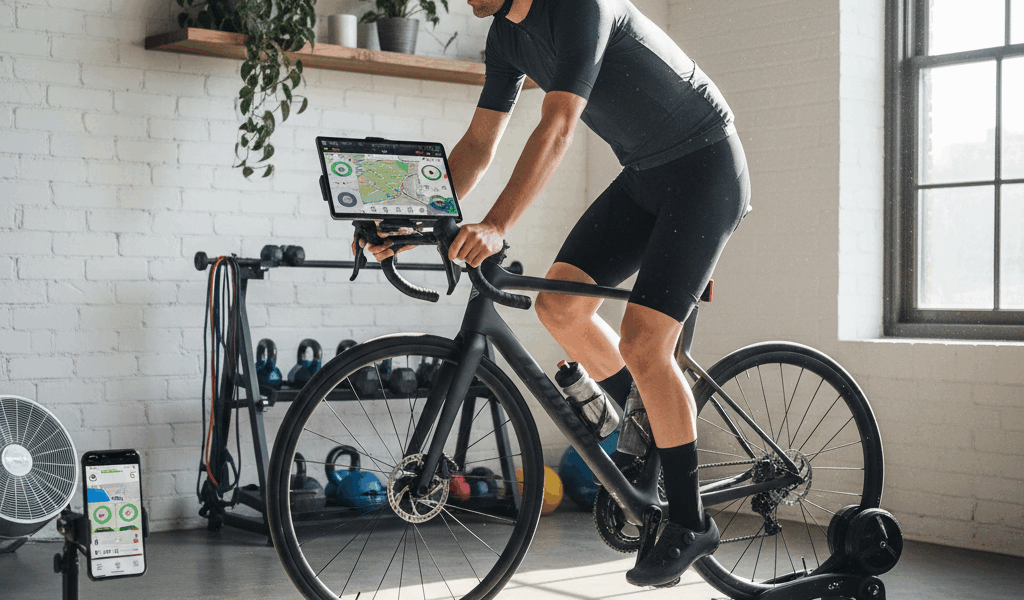
Indoor cycling apps have gotten complicated with all the platforms and subscription debates flying around. As someone who has tested most major apps through multiple winters, I learned everything there is to know about what actually works for different goals. Today, I will share it all with you.
I’ve spent hundreds of hours on these platforms. Some genuinely help with fitness. Others are expensive novelties that lose appeal after a few weeks. Here’s the breakdown.
Zwift
The one everyone talks about. Zwift turned indoor cycling into a video game—virtual worlds, avatars, competition against riders across the globe. You pedal, your little cyclist avatar pedals. You climb, you slow down. Draft behind groups, go faster.
The gamification is genuinely motivating. Chasing achievements, unlocking new virtual bikes and wheels, racing against others—it tricks your brain into forgetting you’re pedaling nowhere. I’ve done four-hour Zwift rides that would’ve been impossible staring at my garage wall.
Structured training exists but feels secondary to the ride experience. Zwift offers workout mode with prescribed intervals, but the platform’s strength is making unstructured riding engaging. Group rides and races provide competition without real event logistics.
Downsides: subscription runs about $15/month. You need a smart trainer or power meter—decent equipment starts around $300-400. The game elements can distract from actual training objectives if you’re preparing for specific events.
Best for: riders who need motivation to get on the trainer, social riders who miss group dynamics, anyone who’d otherwise skip indoor training entirely.
TrainerRoad
Probably should have led with this section, honestly. The opposite philosophy from Zwift. TrainerRoad doesn’t care if you’re entertained—it cares if you’re getting faster. The platform builds structured plans based on your goals, time availability, and fitness level, then guides you through workouts designed around training science.
Workouts display as simple graphs showing target power zones. You see interval durations, upcoming efforts, and actual power output. No virtual worlds, no avatars, no gamification. Just you and the training.
TrainerRoad’s adaptive training adjusts workouts based on performance. Crush an interval set and difficulty might increase next time. Struggle and it recalibrates. This responsiveness makes structured training more forgiving than rigid plans.
The Ask a Cycling Coach podcast is genuinely excellent for understanding training principles. Worth listening to even without the subscription.
Downsides: relentlessly focused on performance, which isn’t everyone’s goal. Less social than alternatives. About $20/month. Requires discipline since there’s no entertainment to compensate for suffering.
Best for: goal-oriented riders preparing for events, athletes who respond to structured training, anyone frustrated by lack of progress from unstructured riding.
Wahoo SYSTM (formerly Sufferfest)
Wahoo bought Sufferfest and rebranded it, maintaining workout videos mixed with intensity. Imagine Zwift’s entertainment combined with TrainerRoad’s structure—except instead of virtual worlds, you watch cycling footage, motivational content, or purpose-built videos.
That’s what makes the 4DP fitness test endearing to us training nerds. Instead of a single FTP number, it measures multiple power durations and builds a profile of strengths and weaknesses. Workouts then target weaknesses specifically.
Video quality is high and editing matches workout intensity. Sprint intervals coincide with exciting race footage. Recovery valleys let you breathe while calmer content plays.
Mental training modules are unique to SYSTM. Guided visualization, focus techniques, race preparation psychology—content you won’t find elsewhere.
Downsides: less social than Zwift, no live competition. Video library is finite—eventually you’ve seen everything. Around $15/month.
Best for: riders who want structure with entertainment, solo trainers who find pure data boring, athletes interested in mental performance alongside physical.
Peloton (Digital)
The digital subscription without the bike works with any smart trainer. Live and on-demand classes follow typical group fitness patterns—instructor leads, music blares, motivation flows freely. Less cycling-specific than dedicated platforms but more accessible to general fitness users.
Class variety is enormous. Everything from 20-minute recovery spins to 90-minute endurance rides. Instructors develop followings; people choose classes based on who’s teaching as much as what they’re teaching.
Downsides: power accuracy depends on your equipment—Peloton metrics work best with their hardware. Training structure is class-based rather than periodized; long-term progression relies on selecting appropriate workouts yourself. About $13/month.
Best for: general fitness users, people who respond to instructor energy, riders who want variety without complicated plans.
Free Alternatives
If subscriptions feel excessive, free options exist. YouTube has countless cycling workout videos. GT’s Indoor Cycling channel offers structured efforts. Rouvy and RGT have free tiers with limited features for trying virtual riding before committing.
The limitation is obvious: less polish, less structure, less motivation to continue. But for occasional indoor training or budget-conscious riders, worth exploring before paying.
My Setup
I subscribe to TrainerRoad for structured training blocks when preparing for events, then cancel during maintenance periods. For those periods, Zwift’s entertainment keeps me on the trainer when pure training motivation isn’t enough.
No single platform does everything. TrainerRoad advocates say entertainment doesn’t matter. The Zwift community argues the best plan is the one you’ll follow. Both perspectives have merit depending on goals and psychology.
The real answer is whichever app gets you on the bike consistently. A mediocre plan executed reliably beats an optimal plan you abandon by February. Try free trials, find what motivates you, and don’t overthink it.



Stay in the loop
Get the latest wildlife research and conservation news delivered to your inbox.