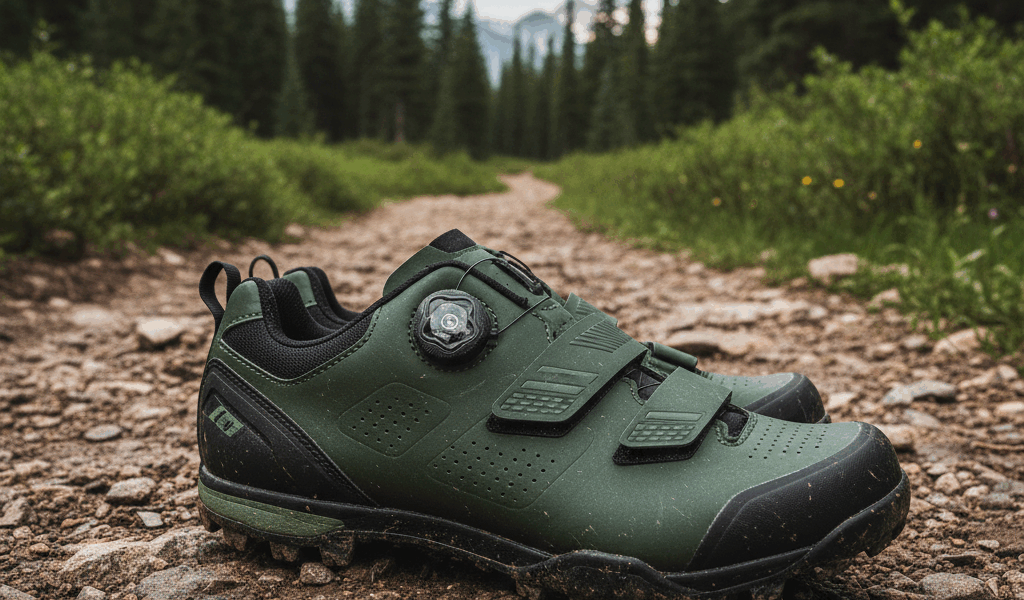
Mountain bike shoes have gotten complicated with all the closure systems and sole compounds flying around. As someone who’s worn everything from skate shoes to carbon-soled race footwear on trails, I learned everything there is to know about what actually matters for grip, power, and protection. Today, I will share it all with you.
That’s what makes proper MTB footwear endearing to us gear-obsessed riders — the right shoes genuinely improve the ride.
Two Fundamental Choices
But what is the key decision? In essence, flat pedal shoes versus clipless shoes. But it’s much more than that.
Flat pedal shoes have sticky rubber soles that grip platform pedals. Clipless shoes have stiff soles and cleats that lock into special pedals. Each serves different riding styles and preferences.
I’m apparently in the camp that uses both — flats on my trail bike for technical riding, clips on my XC bike for efficiency. Neither is universally “better.”
Flat Pedal Shoes
Probably should have led with this section, honestly — flat pedal shoes are what most trail riders should start with.
The magic is in the rubber compound. Five Ten’s Stealth rubber became famous for its grip on flat pedals. Other brands have developed competing compounds. The soft rubber conforms around pedal pins, creating connection without mechanical attachment.
Frustrated by my feet slipping off pedals in regular sneakers, I bought dedicated flat shoes in 2018. The difference was immediate — my feet stayed planted through rough sections that previously bounced them around.
Good flat pedal shoes have:
- Soft, sticky rubber soles
- Relatively stiff midsoles for support
- Toe protection for rock strikes
- Ankle protection on high-top models
Clipless Shoes
Clipless shoes lock to the pedal via cleats. You twist your heel to release. The connection improves power transfer and lets you pull up as well as push down on the pedals.
The learning curve is real. Everyone falls over at least once while learning to clip out. Usually at a stoplight with witnesses. It’s a rite of passage.
Once proficient, clipless offers efficiency advantages. XC racers and riders who prioritize climbing power often prefer clips. The secure connection also helps in mud where flat pedals might lose grip.
Sole Stiffness
Stiffer soles transfer power better. Your foot doesn’t flex, so all your pedaling force goes to the pedal. XC race shoes are extremely stiff — uncomfortable to walk in, but efficient on the bike.
Trail shoes balance stiffness with walkability. You’ll hike-a-bike sometimes. Being able to walk without feeling like you’re wearing ski boots matters.
The trade-off is personal. I prefer moderate stiffness — enough support for efficient pedaling, flexible enough to scramble over rocks when needed.
Protection
Mountain biking involves rocks, roots, and occasional crashes. Shoes take abuse.
- Toe boxes: Reinforced toe areas protect against rock strikes. I’ve dented toe caps that would have been broken toes otherwise.
- Ankle protection: High-top models offer ankle coverage for gnarly terrain. More protection, less flexibility.
- Sole durability: Expect to replace MTB shoes every 1-2 seasons with regular riding. The soft rubber wears.
Closure Systems
Laces: Simple, adjustable, familiar. Can snag on chainrings if too long. Tuck excess or use lace locks.
Velcro straps: Quick adjustment, reliable. Can clog with mud. Most trail shoes use velcro with good results.
BOA dials: Micro-adjustable, even pressure. More expensive but convenient. Popular on higher-end shoes.
Ratchet buckles: Secure, precise. Common on clipless XC shoes.
What I Actually Wear
- Five Ten Freerider: My flat pedal shoe. Excellent grip, reasonable durability, comfortable fit. The benchmark for flat shoes.
- Shimano XC5: My clipless shoe for XC rides. Stiff, light, secure. Walks okay for a race shoe.
Making the Call
Starting out? Get flat pedal shoes. Learn bike handling without worrying about clipping out. The sticky rubber transforms the pedal connection.
Ready for clipless? Try them on a friend’s bike first if possible. The efficiency gain is real, but so is the learning curve.
Don’t cheap out on MTB shoes. The rubber compound and construction quality matter. Budget shoes with hard rubber soles slip. Mid-range shoes from established brands work well. Premium shoes offer marginal improvements at higher prices.

Stay in the loop
Get the latest wildlife research and conservation news delivered to your inbox.