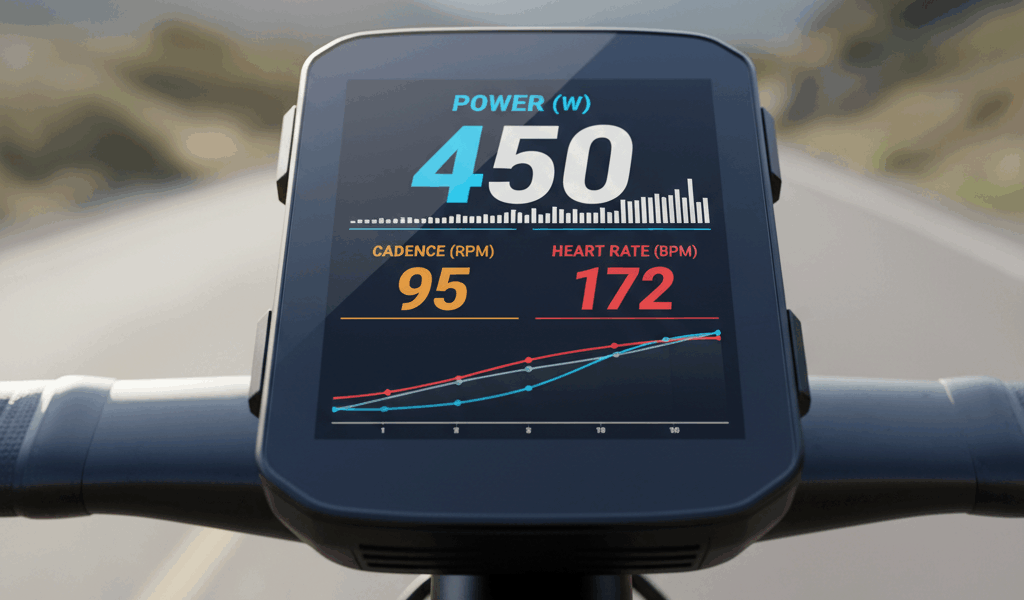
3 Cycling Metrics That Actually Matter (From Someone Who Obsessed Over All of Them)
When I got my first bike computer, I went a little overboard. Suddenly I was tracking everything – cadence, heart rate, power, elevation, speed, temperature, probably my zodiac sign if there was a sensor for it. Information overload doesnt even begin to describe it.
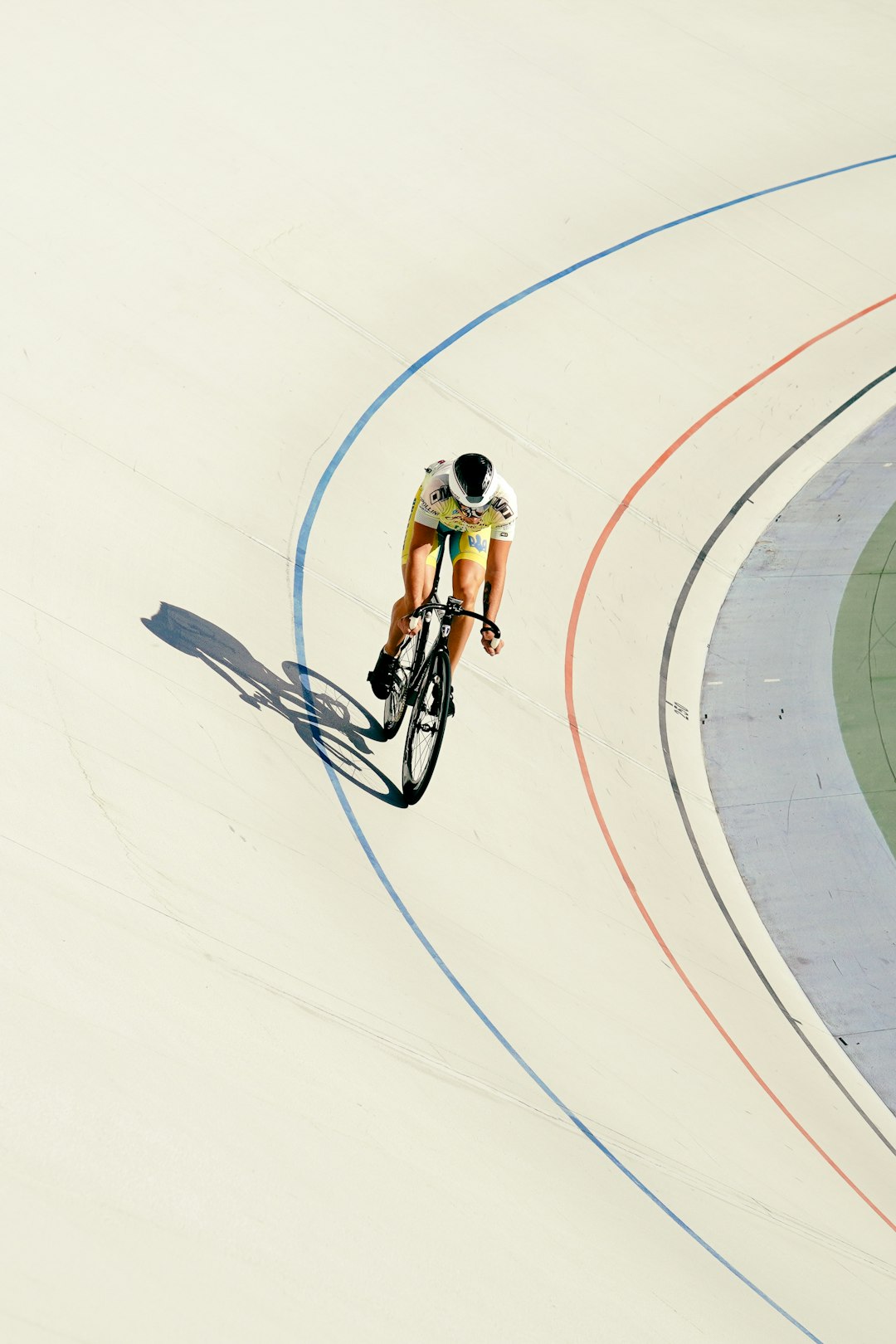
After a couple years of data hoarding and actually learning what helps me ride better, Ive narrowed it down. Here are the three metrics I actually look at now, and why the rest mostly just clutters my screen.
1. Power (The One That Changed Everything)
I resisted getting a power meter for years. Too expensive, I said. Heart rate is fine, I said. Then I borrowed a friends bike with a power meter for a week.
Game. Changer.
Heres the thing about power – it doesnt lie. Heart rate lags, gets affected by caffeine, heat, stress, how well you slept. Speed depends on wind, terrain, whether youre drafting someone. But watts? Watts are watts. If youre pushing 200 watts, youre pushing 200 watts. Period.
What I use it for:
Pacing on climbs. Before power, Id blow up halfway up long climbs because I started too hard. Now I know my sustainable numbers. If Im at 280 watts at the bottom of a 20-minute climb and I know I can only hold 240 for that long, I immediately ease off. No more dying at the top.
Tracking fitness over time. My FTP (basically the power I can sustain for an hour) was 195 when I started. Its 248 now. I know exactly how much Ive improved, not just I feel faster.
Structured training. Intervals become so much more precise. Hold 110% of FTP for 4 minutes gives me an exact target. No guessing, no this feels hard enough.
The downside? Power meters arent cheap. But prices have come down a lot – you can get pedal-based ones for $300-400 now. Honestly worth it if youre serious about improving.
2. Heart Rate (Still Useful, Just Different)
I used to think heart rate was the be-all metric. Now I see it more as a supporting player – tells me things power cant.
What I actually use heart rate for now:
Recovery monitoring. If my resting heart rate in the morning is 10 beats higher than normal, I probably didnt recover from yesterdays ride. Time to take it easy. My watch tracks this while I sleep, which feels slightly creepy but is genuinely useful.
Heat and fatigue. If Im putting out 200 watts but my heart rate is 20 beats higher than usual at that power, somethings off. Usually its heat, dehydration, or Im getting sick. Power tells me what Im doing, heart rate tells me how my body feels about it.
Zone training without power. Before I got my power meter, heart rate zones were how I structured easy vs. hard efforts. Still works fine for that purpose. I have a chest strap for accuracy but wrist-based monitors have gotten pretty decent for steady-state riding.
The trick with heart rate is knowing its limitations. It responds slowly – you start a hard effort and heart rate takes 30-60 seconds to catch up. It drifts upward during long efforts even at the same power. Dont obsess over instantaneous numbers. Look at trends.
3. Cadence (More Important Than I Thought)
For a long time I ignored cadence completely. Spin the pedals, whatever feels natural, right?
Then I started paying attention and realized my natural cadence was wildly inconsistent. Sometimes 70 rpm, sometimes 95. Depends on how I was feeling, what gear I grabbed. Turns out that inconsistency was costing me efficiency and burning out my legs unnecessarily.
What changed when I started targeting cadence:
Found my efficient range. For me, its 85-95 rpm for steady efforts. Lower than that and Im grinding, higher and I feel like Im spinning too fast and getting winded. Everyones different, but theres usually a sweet spot.
Better climbing. I used to mash big gears on climbs. Felt strong. Also destroyed my legs by mile 40. Now I deliberately spin lighter gears at higher cadence on long climbs. Feels less powerful, but I have way more left at the end of a ride.
Pacing improvement. Maintaining consistent cadence forces better pacing. If I notice my cadence dropping, I need to shift easier or Im about to blow up.
Most bike computers show cadence if youve got the sensor. Mine is on my crankarm and was like $30. Worth it for the awareness alone.
Stuff I Stopped Caring About
For what its worth, heres what I used to track religiously that I basically ignore now:
Average speed. Meaningless without context. Ride with a tailwind on flat roads and you look fast. Ride into wind with climbs and you look slow. Same effort, totally different numbers. Ive had my best fitness coincide with lower average speeds because I was doing hillier routes.
Distance. I mean, I note it, but a 50-mile ride can be easy or brutal depending on terrain and intensity. I rode 50 miles tells you almost nothing. I rode 50 miles at 220 average power with 4000 feet of climbing tells you something.
Calories burned. These estimates are wildly inaccurate. Ive seen my bike computer and my watch disagree by 40% on the same ride. Nice to glance at, useless for actual decisions.
Getting Started With Metrics
If youre just beginning to track this stuff, my honest advice:
Start with heart rate. Cheapest, easiest to understand. Get comfortable training by feel while using HR as a check.
Add cadence next. Very affordable sensors, helps you understand your pedaling patterns.
When youre ready for the next level, invest in power. This is where the real insights come. But its also more expensive and requires more knowledge to use effectively.
And whatever you track – dont let it ruin the fun. I went through a phase where I was so obsessed with numbers that I forgot to actually enjoy riding. Now I check metrics during structured training and mostly ignore them on just riding days. Balance matters.
The goal is faster, stronger, more efficient cycling. The numbers are just tools to get there. Dont worship them, dont ignore them. Use them.

Stay in the loop
Get the latest wildlife research and conservation news delivered to your inbox.