MTB Body Armour – Lessons Learned From Hitting the Ground
I have crashed more times than I care to count. Some were minor oops moments, others involved ambulances. The one thing I learned? Good body armour is the difference between walking away with a bruise and spending weeks on the couch. Here is everything I know about protecting yourself on the trails.
Why I Started Taking Protection Seriously
Quick story: I was riding a black diamond trail near my home spot, felt confident, got sloppy on a rock garden, and went over the bars. Landed on my shoulder and elbow. No armour. Six weeks of not being able to ride, plus physical therapy. Could have been prevented with $60 elbow pads.
That was my wake-up call. Now I gear up for every ride, even the easy ones. Crashes do not care if you are on an advanced trail or a beginner loop.
The Stuff That Actually Matters
Helmets – Non-Negotiable
I should not have to say this but always wear a helmet. Always. I know people who have walked away from crashes that should have killed them because they were wearing a good helmet.
For regular trail riding, a half-shell is fine. Get one with MIPS if you can afford it – the rotational protection is worth the extra cost. I crashed last year and the MIPS liner probably saved me from a concussion.
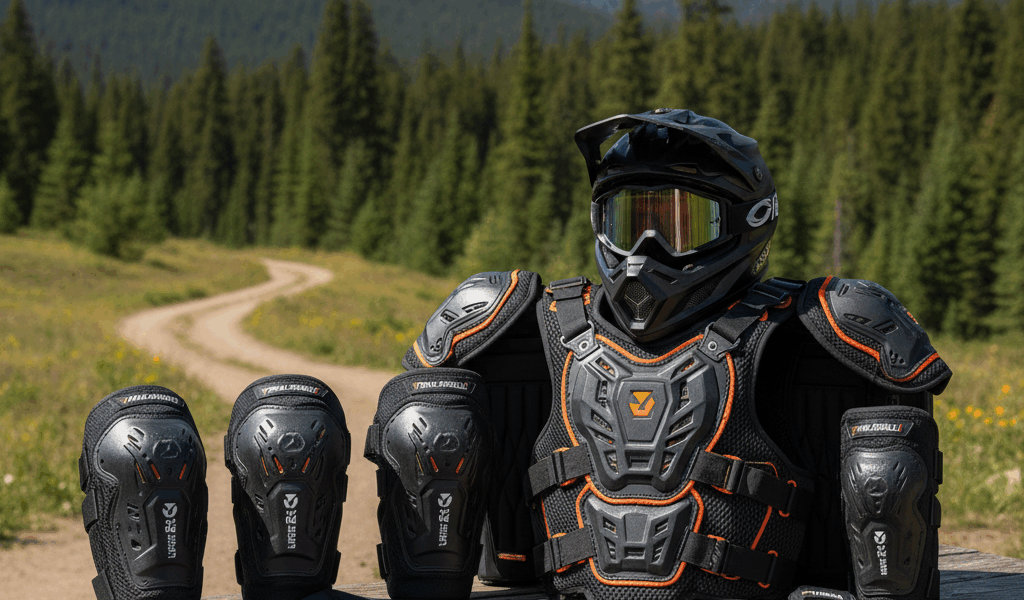
For downhill or really gnarly stuff, go full-face. Yes it is hotter. Yes it is heavier. No I do not care about those complaints anymore after seeing someone take a handlebar to the jaw.
Knee Pads – My Most-Used Protection
Knee pads are what I reach for on every single ride. Your knees take the brunt of most crashes, and knee injuries are nasty. They take forever to heal and can become chronic problems.
I use lightweight pedaling pads for XC style riding – they breathe well and you barely notice them. For the rough stuff, I switch to hard-shell pads that can actually stop a rock from destroying my kneecap.
The key is getting pads that stay in place. Cheap pads slide around when you need them most. Spend the extra money on ones with proper straps and silicone grippers.
Elbow Pads – The Forgotten Heroes
People always forget elbow pads until they have road rash from their wrist to their shoulder. When you crash, your natural reaction is to put your arms out. Your elbows are going to hit something.
I wear elbow pads on anything technical. They are not as essential as knee pads for casual riding, but for bike parks or aggressive trail riding, they are mandatory in my book.
Gloves – More Than Just Grip
Gloves protect your palms when you inevitably put your hands down in a crash. I have seen nasty palm injuries that kept people off bikes for months. Also they give you better control of the bars, which helps prevent crashes in the first place.
I prefer gloves with padding in the heel of the palm. The extra cushion helps with vibration on long rides and protects the parts of your hand most likely to contact the ground.
Back and Chest Protectors – For the Serious Stuff
If you are riding bike parks or really pushing your limits, consider a back protector. Landing on a rock with your spine is not something you want to experience.
I started wearing a spine protector after watching a friend break vertebrae in a crash. It is not the most comfortable thing ever, but peace of mind is worth the slight inconvenience.
Materials and Technology Stuff
Modern armour uses some pretty cool tech. D3O and similar materials are soft and flexible when you are moving normally, then harden on impact. It sounds like marketing speak but it actually works – I have tested it unfortunately.
Traditional hard plastic still has its place for maximum protection, especially in bike park scenarios. But for general trail riding, the flexible stuff is more comfortable and protective enough for most crashes.
Finding Armour That Fits
Fit matters more than brand. Armour that does not stay in place is useless. Armour that restricts your movement is annoying enough that you will not wear it.
Here is what I look for:
Knee pads should stay put when you pedal. If they slide down every 10 minutes, they are useless in a crash. Try them on and do some movement – squat, walk around, pretend to pedal. They should not shift.
Elbow pads same deal. They need to flex with your arm but stay centered over the elbow. A pad that ends up on your bicep is not protecting anything useful.
Ventilation matters more than you think. Overheating in armour is real, and if you take it off because you are too hot, it can not protect you. Look for mesh panels and vents.
Matching Protection to Riding Style
Cross-country riders: lightweight pads, maybe just knees. You are not doing crazy stuff and need to prioritize efficiency.
Trail riders: knee pads always, elbows optional depending on trail difficulty. A good half-shell helmet is essential.
Enduro and aggressive trail: full knee pads, elbow pads, full-face helmet for rowdy stuff. Consider a back protector for bike parks.
Downhill and bike park: everything. Full-face helmet, knee and shin guards, elbow pads, back protector, maybe a neck brace. You are going fast and hitting stuff hard.
Taking Care of Your Gear
Armour gets stinky. Wash it regularly with mild soap. Most modern pads can handle a gentle washing machine cycle – check the labels.
Inspect for damage after crashes. Foam that is compressed or cracked will not protect as well next time. Helmets need replacing after significant impacts.
Store it properly. Do not leave pads stuffed in a bag indefinitely – they will stay stinky and the foam can degrade. Let them air out after rides.
Brands I Trust
Fox Racing makes solid stuff at reasonable prices. My Fox knee pads have survived three seasons and multiple crashes.
POC is premium but worth it if you can afford it. Their helmets especially are excellent.
Leatt makes great neck braces and their other armour is coming along nicely.
Dakine makes good budget-friendly options. Not as fancy but gets the job done.
The Real Talk
Good armour is expensive but medical bills are more expensive. Physical therapy is expensive. Time off work is expensive. Not being able to ride for weeks or months is expensive in its own way.
I would rather spend $200 on knee pads than $5000 on knee surgery. That math is pretty simple.
Wear your armour. Every ride. It only takes one crash to change your life, and you never see that crash coming. The inconvenience is tiny compared to the protection you get.
Stay safe out there. And when you do crash (you will), make sure you are wearing the stuff that lets you get back up and keep riding.