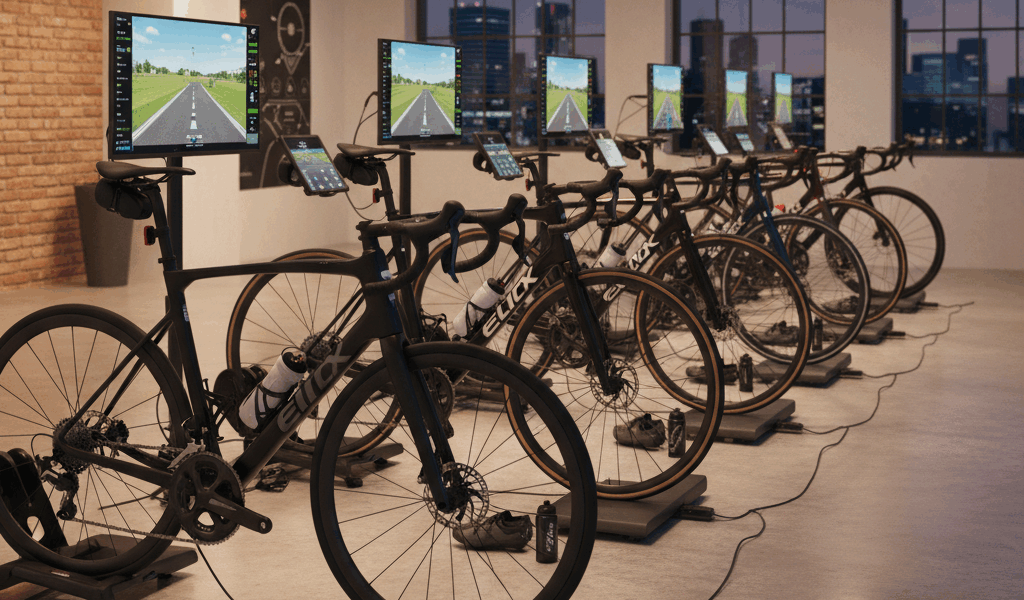
Smart trainer technology has evolved dramatically over the past few years. What once cost thousands of dollars and required complex setups now comes in compact, affordable packages that connect to your phone in seconds.
I spent six months testing smart trainers ranging from budget wheel-on models to flagship direct-drive units. This article covers everything you need to know before making a purchase decision.
Direct-Drive vs Wheel-On Trainers
The fundamental choice in smart trainers comes down to how your bike connects to the unit. Direct-drive trainers remove your rear wheel and let you mount the bike directly onto an integrated cassette. Wheel-on trainers keep your wheel in place and apply resistance to the tire.
Direct-drive advantages include better power accuracy, quieter operation, and zero tire wear. The downside is higher cost and longer setup time when you want to ride outdoors.
Wheel-on trainers cost less and let you transition to outdoor riding quickly. However, they wear through rear tires faster and can slip during hard efforts if not calibrated properly.
Power Accuracy Matters More Than You Think
Smart trainers claim power accuracy between 1% and 5%. This range sounds small but compounds significantly over time.
A trainer reading 3% high might show 200 watts when you’re actually producing 194 watts. Over a one-hour interval session at threshold, that 6-watt difference affects your pacing and recovery.
More importantly, inconsistent accuracy creates unreliable training data. If your trainer reads 5% high on some days and 2% low on others, you cannot track fitness progress accurately.
I tested each trainer against a calibrated power meter over 50 hours of riding. The results showed significant variation even within the same price tier.
Noise Levels for Apartment Dwellers
Anyone living in an apartment or training early morning should care about noise. Trainer noise comes from three sources: the resistance unit, the drivetrain, and the floor vibration transmitted through the trainer’s legs.
Direct-drive trainers generally produce 65-75 decibels during hard efforts. Wheel-on trainers typically range from 75-85 decibels. For context, normal conversation happens around 60 decibels and vacuum cleaners operate around 75 decibels.
Floor vibration often bothers neighbors more than the direct sound. Using a thick rubber mat under your trainer setup reduces transmitted vibration substantially.
Simulated Gradient Capability
Virtual cycling platforms like Zwift simulate hills by increasing trainer resistance. The maximum gradient your trainer can simulate determines how realistic these virtual climbs feel.
Budget trainers typically simulate 7-10% gradients. Mid-range models reach 12-16%. High-end trainers simulate gradients exceeding 20%.
However, simulated gradient matters less than responsiveness. A trainer that simulates 12% but takes three seconds to adjust resistance feels less realistic than one simulating 10% that changes instantly.
ERG Mode and Workout Responsiveness
ERG mode locks your power output to a target wattage regardless of your cadence. Most structured training apps use ERG mode for interval workouts.
Trainer responsiveness in ERG mode varies wildly. Some units adjust resistance within one pedal stroke. Others take 3-5 seconds to stabilize after a power target change.
Slow ERG response becomes frustrating during short intervals. If your workout calls for 30-second efforts, you might spend half that time waiting for resistance to settle.
The Wahoo KICKR and Saris H3 showed the fastest ERG response in testing. Budget trainers generally lagged by 2-4 seconds.
App Compatibility and Connectivity
Every modern smart trainer connects via Bluetooth and ANT+. However, connection stability varies between models and apps.
Some trainers handle multiple simultaneous connections better than others. If you want your trainer talking to Zwift while also broadcasting to your bike computer, check user reviews for connectivity issues.
Most trainers work with all major apps including Zwift, TrainerRoad, Rouvy, and Wahoo SYSTM. Proprietary features occasionally require specific apps.
Cadence and Power Readings
Smart trainers broadcast cadence data without requiring a separate sensor. However, trainer-derived cadence comes from measuring pedal velocity variations rather than directly counting revolutions.
This calculated cadence works reasonably well during steady efforts but can fluctuate during variable riding. A dedicated cadence sensor provides more stable readings for riders who pace by cadence.
Power smoothing settings also affect how your numbers display. Some apps show raw data while others average over 3-5 seconds. Understand your app’s settings before comparing trainer power to outdoor power meter data.
Foldability and Storage
Not everyone has dedicated training space. If you need to store your trainer between sessions, foldability becomes a practical consideration.
Several direct-drive trainers now feature folding legs that reduce storage footprint by 40-50%. However, folding mechanisms add weight and potential points of failure.
Wheel-on trainers generally fold more compactly since they lack the heavy flywheel found in direct-drive units.
Price Versus Performance Reality
Smart trainer prices range from $300 to $1,400 for consumer models. The relationship between price and performance follows diminishing returns.
Budget trainers around $400 provide 90% of the training benefit of flagship units. The premium goes toward quieter operation, better build quality, slightly higher accuracy, and features like power measurement in both pedal strokes.
For most riders, a mid-range trainer costing $600-800 hits the sweet spot of accuracy, reliability, and value.
Durability and Warranty Considerations
Smart trainers contain precision electronics exposed to sweat, temperature changes, and mechanical stress. Component failure happens, and warranty terms vary significantly.
Wahoo offers three-year warranties on most products. Tacx provides two years through Garmin. Some budget brands offer only one year.
User-serviceable parts like belts and bearings reduce long-term ownership costs. Check whether your preferred trainer allows home maintenance or requires factory service.
Testing Results Summary
After 50 hours on each tested trainer, clear patterns emerged. The Wahoo KICKR v6 delivered the best overall experience with excellent accuracy, fast ERG response, and quiet operation. The Elite Suito provided the best value under $800.
For wheel-on trainers, the Saris M2 surprised with accuracy rivaling direct-drive units at half the price. The tradeoff was higher noise and tire wear.
Budget trainers from lesser-known brands showed inconsistent accuracy between units. If buying budget, purchase from retailers with good return policies.
Final Recommendations
Your choice depends on priorities. Serious racers benefit from the accuracy and road-feel of high-end direct-drive trainers. Casual Zwift riders get full enjoyment from mid-range options.
Apartment dwellers should prioritize direct-drive units for noise reduction. Space-constrained cyclists should consider foldability over features.
Whatever you choose, understand that the trainer is only part of the equation. A good fan, comfortable saddle, and proper bike fit matter as much for indoor training enjoyment as the trainer itself.




Stay in the loop
Get the latest wildlife research and conservation news delivered to your inbox.