Road bike sizing has gotten complicated with all the different measurement systems and brand variations flying around. As someone who bought the wrong size first bike and learned the hard way, I learned everything there is to know about getting the right fit. Today, I will share it all with you.
That’s what makes bike sizing endearing to us fit-obsessed cyclists — the right size transforms the riding experience.
How Sizing Works
Probably should have led with this section, honestly — understanding the measurement helps prevent mistakes.
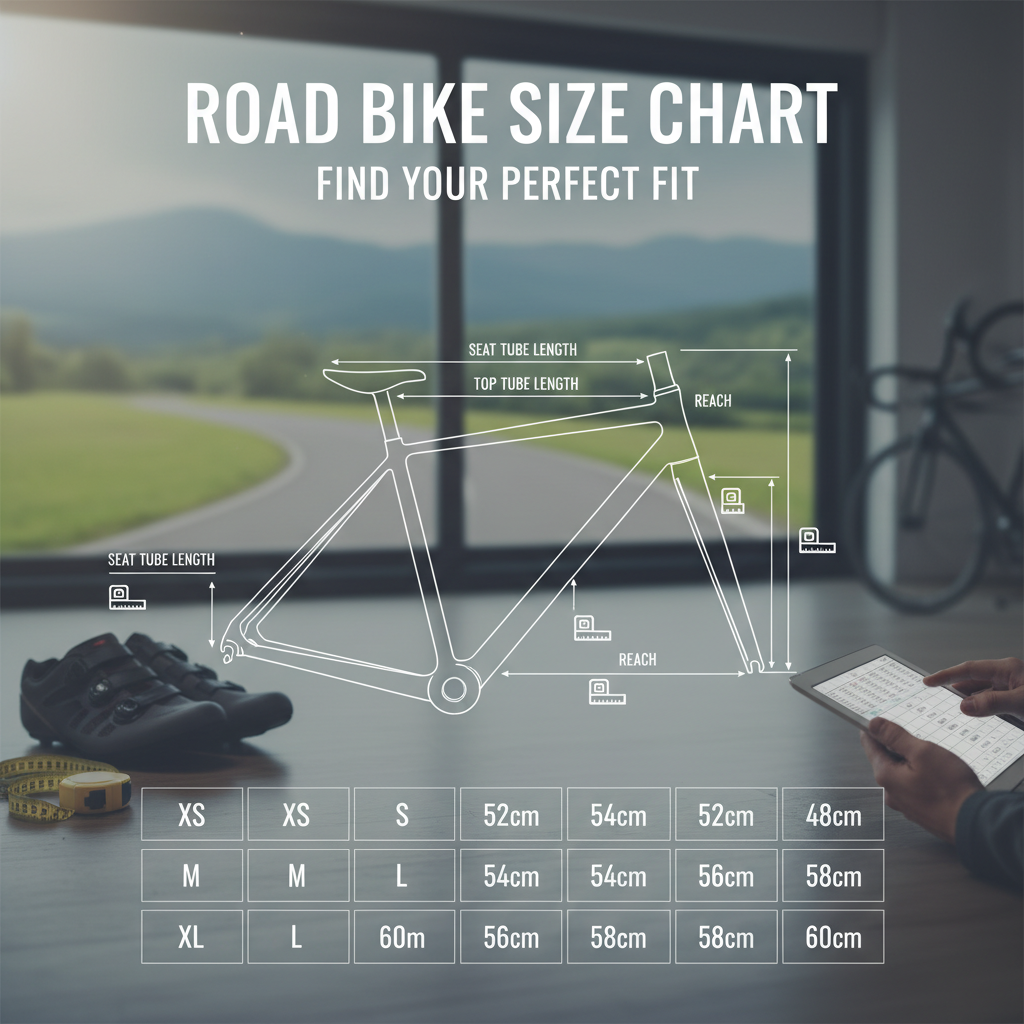
Road bike sizes typically refer to seat tube length in centimeters — the distance from bottom bracket center to top of seat tube. This correlates roughly with overall frame size but isn’t the whole picture.
Height-Based Starting Point
General guidelines based on rider height:
- 5’0″ – 5’3″ (152-160 cm): 49-50 cm frame
- 5’3″ – 5’6″ (160-168 cm): 51-53 cm frame
- 5’6″ – 5’9″ (168-175 cm): 54-55 cm frame
- 5’9″ – 6’0″ (175-183 cm): 56-58 cm frame
- 6’0″ – 6’3″ (183-191 cm): 58-60 cm frame
- 6’3″+ (191+ cm): 61-63 cm frame
These are starting points, not absolutes. Proportions vary.
More Important Measurements
But what if height-based sizing doesn’t work? In essence, inseam and torso matter more than overall height. But it’s much more than that.
Inseam: Measure inner leg from floor to crotch. This affects saddle height range and standover clearance.
Reach: Torso and arm length affect how far you need to reach to the handlebars. Top tube length and stem length combine for total reach.
Sizing Between Options
I’m apparently in the camp that went smaller when between sizes. Frustrated by feeling stretched out on my first bike, I sized down and added a longer stem for fine-tuning.
Racing preference: smaller for more aggressive position. Comfort preference: larger for more upright position. Either works — depends on your priorities.
Fine-Tuning After Purchase
- Saddle height: Leg almost fully extended at bottom of pedal stroke
- Saddle position: Knee over pedal axle when pedals are horizontal
- Stem length/angle: Adjusts reach and handlebar height
- Handlebar height: Level with or below saddle for road bikes
Professional Fitting
If you’re investing serious money or experience persistent discomfort, professional bike fitting is worthwhile. Fitters analyze position, flexibility, and pedaling dynamics to optimize setup.
Making the Call
Use height-based guidelines as starting point. Test ride when possible. Between sizes, consider your riding goals. Fine-tune after purchase. Don’t ignore persistent discomfort — it usually indicates fit issues.