Bicycle categories have gotten complicated with all the sub-genres and marketing terms flying around. As someone who owns five different bikes for different purposes, I learned everything there is to know about what each type actually does well. Today, I will share it all with you.
That’s what makes understanding bike types endearing to us multi-bike enthusiasts — knowing which tool fits which job.
Road Bikes
But what is a road bike? In essence, it’s a bike optimized for speed on pavement. But it’s much more than that.
Lightweight frames, narrow tires, drop handlebars, and aggressive geometry all serve one goal: go fast on tarmac. The position puts you low and aerodynamic. The components prioritize precision over durability.
Road bikes struggle off pavement. Those narrow tires and rigid frames transmit every bump directly. Take one on gravel and you’ll understand the limitations quickly.
Mountain Bikes
Mountain bikes handle terrain that would destroy a road bike. Wide tires, suspension, and sturdy frames absorb impacts from rocks, roots, and drops.
Frustrated by my road bike’s limitations on fire roads, I bought a mountain bike in 2016. Suddenly trails I’d avoided became playgrounds. The capability transformation was dramatic.
Within the category: hardtails (front suspension only) are simpler and lighter. Full-suspension bikes (front and rear suspension) absorb more punishment but cost and weigh more.
Gravel Bikes
Probably should have led with this section, honestly — gravel bikes are the fastest-growing category for good reason.
They’re road bikes modified for rougher surfaces. Wider tire clearance, relaxed geometry, more durable components. You can ride pavement efficiently, then turn onto gravel or dirt without stopping.
I’m apparently in the camp that considers gravel bikes the most versatile single-bike solution. One bike that does road rides, light trails, bikepacking, and commuting reasonably well.
Hybrid Bikes
Hybrids combine road and mountain bike features for casual riding. Upright position, flat handlebars, medium-width tires. They prioritize comfort over speed or technical capability.
Good for: commuting, bike paths, casual exercise. Not optimized for: speed, serious off-road, long distances. A reasonable choice if you need one bike for general transportation.
Electric Bikes
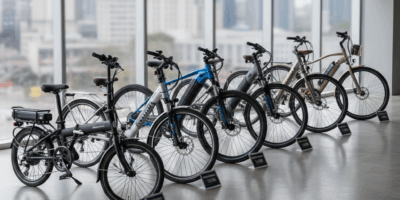
Electric bikes add motor assistance to any category above. E-road bikes, e-mountain bikes, e-commuters all exist. The motor helps on hills and extends range.
E-bikes remove barriers. Knee problems, fitness limitations, steep commutes — the motor compensates. They’re not cheating; they’re enabling.
Other Categories
- Touring bikes: Built for loaded long-distance travel. Strong wheels, many mounting points, comfortable geometry.
- Cyclocross bikes: Racing bikes for off-road courses. Like gravel bikes but more aggressive.
- BMX: Small, maneuverable bikes for tricks and racing. Not for distance.
- Folding bikes: Compact for storage and transit. Compromise on ride quality for portability.
- Cruisers: Comfortable, upright, leisurely. Beach paths and boardwalks.
- Fat bikes: Extra-wide tires for snow and sand. Niche but effective.
Making the Call
Match bike to intended use. One bike can’t do everything optimally. A road bike climbs better than a mountain bike. A mountain bike descends better than a road bike. A gravel bike does both adequately but neither perfectly.
Start with what you’ll actually ride. A theoretical perfect bike you don’t use matters less than an imperfect bike you ride daily.