My Honest Take on MTB Glasses (After Breaking 4 Pairs)
Look, I will be straight with you – I used to think riding glasses were just for people who wanted to look cool on the trails. Then I took a branch to the eye doing a descent near Moab and spent two hours at urgent care. So yeah, MTB glasses matter. Let me share what I have learned after going through way too many pairs.
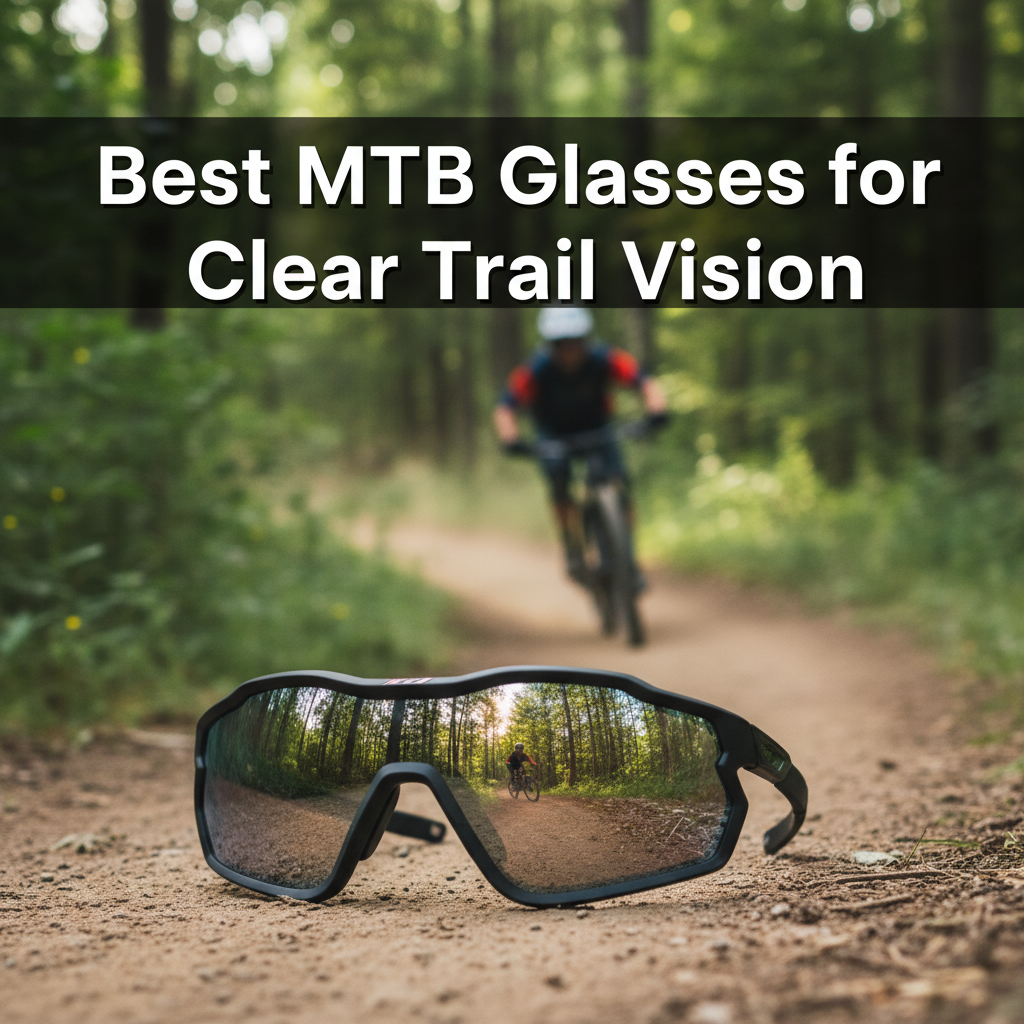
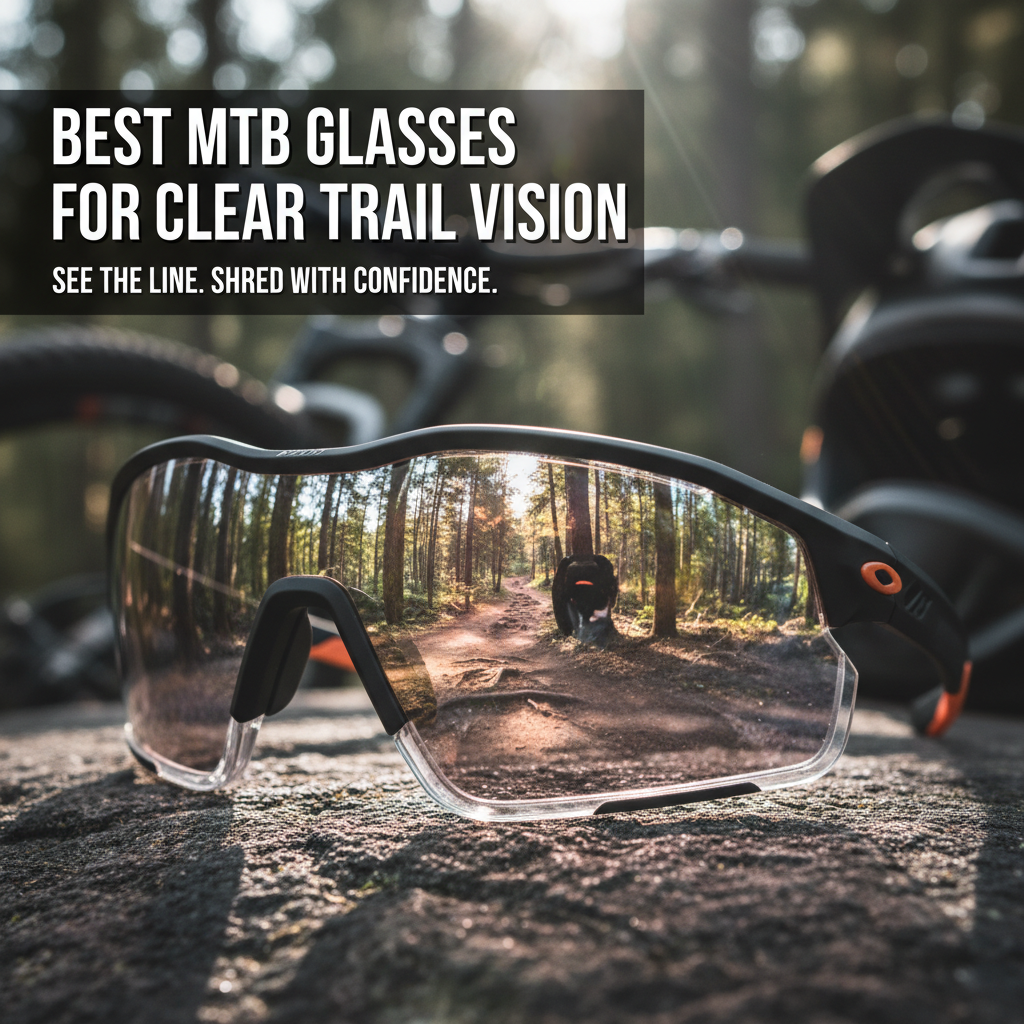
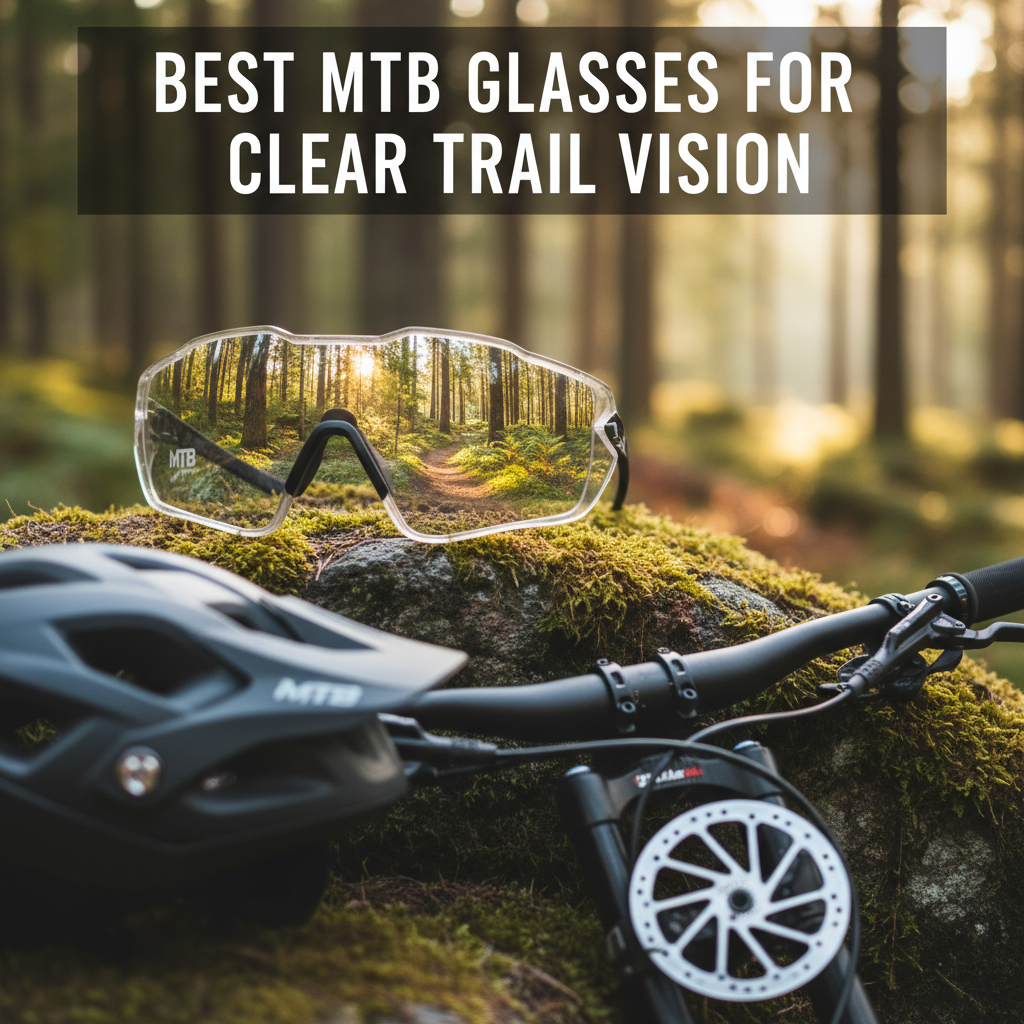
Why Your Eyes Need Protection on Trails
Here is the thing nobody tells you when you start mountain biking: stuff flies at your face constantly. Rocks kicked up by your front wheel, dust clouds on dry days, bugs that seem magnetically attracted to your eyeballs. I once had a bee get stuck between my glasses and my face at 20mph. That was… an experience.
And do not get me started on UV damage. I am in my 40s now and my optometrist literally asked if I spend a lot of time outdoors unprotected. Apparently squinting into the sun for years is not great for your eyes. Who knew.
Different Lens Types (And Which Ones Actually Work)
I have tried pretty much every lens type out there at this point. Here is my honest assessment:
Photochromic – My Current Favorite
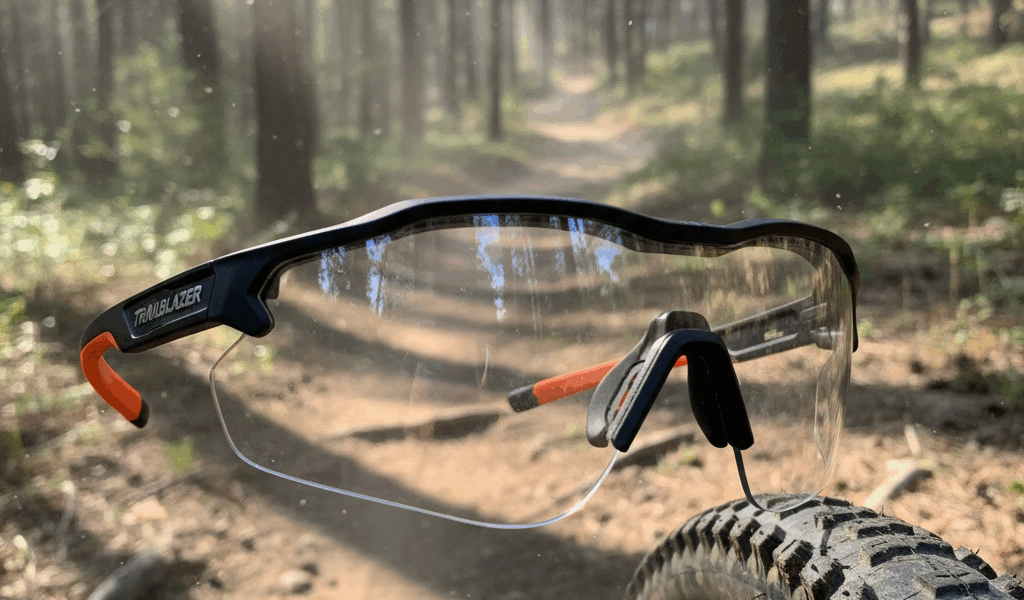
These are the ones that darken in sunlight and go clear when it is dim. Took me forever to try them because they are expensive, but honestly? Game changer. I do a lot of dawn patrol rides and the lighting changes constantly. Having lenses that adapt means I am not swapping glasses mid-ride or squinting through the wrong tint.
The downside – and this is real – they take like 30 seconds to fully transition. So if you go from bright sun into heavy tree cover, there is an awkward moment where you cannot see great. I have learned to just slow down during transitions.
Polarized – Good But Not Perfect
I used polarized lenses for maybe two years before switching. They are fantastic for cutting glare, especially if you ride near water or on wet trails after rain. But here is the problem nobody mentions: you cannot read your GPS or phone screen easily with polarized lenses. The screen goes all weird and dark at certain angles. Super annoying when you are trying to check directions.
Interchangeable Lens Systems
On paper these make total sense – carry different lenses for different conditions, swap as needed. In practice? I always forget to bring the other lenses, or I cannot find them in my pack when I need them, or my sweaty hands cannot get the things to pop out. Now I just have an expensive pair of glasses with three sets of lenses sitting in a drawer at home.
Frames That Actually Stay On Your Face
I have a weird head shape. There, I said it. Finding glasses that do not slide down my nose when I am sweating buckets on a climb has been a whole journey.
Wraparound frames work best for me. Yeah, they look kinda dorky, but they stay put and protect from debris coming in at angles. I tried the sleeker half-frame style for a while and they were constantly sliding around. Plus I got sunburn on my temples where the frames did not cover. Learned that lesson the hard way.
The rubber nose pieces and temple grips make a huge difference. My current pair (Smith Wildcat, if you are curious) has these tacky rubber bits that actually grip better when wet. Pretty clever engineering.
The Fog Problem Nobody Has Really Solved
Real talk: fogging is still an issue. Every manufacturer claims their anti-fog coating is revolutionary and will solve all your problems. They are exaggerating. When you are grinding up a steep climb on a cool morning, your glasses are gonna fog. Period.
What actually helps:
- Vented frames – not perfect but definitely better than solid
- Cat Crap anti-fog (yes that is the real name) – works okay, gotta reapply it
- Keeping your helmet vents open to get airflow across your face
- Just accepting that you will need to wipe them occasionally
I have mostly made peace with this. It is annoying but not a dealbreaker.
Brands I Have Actually Used
I am not sponsored by anyone (obviously, look at my YouTube subscriber count), so these are just honest opinions:
Oakley – Expensive but they last. My Radar EV pair survived like 5 crashes and only finally broke when I sat on them. The optics are genuinely better than cheaper options. If you have got the budget, they are worth it.
Smith – My current go-to. The ChromaPop lenses are really good for seeing trail features clearly. Slightly cheaper than Oakley and I honestly cannot tell much difference in quality. Plus their warranty support has been solid.
100 Percent – Great value option. My buddy swears by his Speedtrap glasses and he has been using the same pair for three years of hard riding. They are a bit flashier style-wise if that is your thing.
Random Amazon brands – I have tried a few sub-30 dollar pairs and… you get what you pay for. The optics are noticeably worse, the frames feel cheap, and one pair literally fell apart on a ride. Save up for something decent.
Prescription Riders Have Options Now
I do not need prescription lenses but my wife does, and she was struggling with this for years. Contacts dry out during rides and regular glasses do not protect well enough. She finally got a pair with prescription inserts – basically a little frame that clips inside the main glasses and holds prescription lenses. Works surprisingly well, though she says there is a slight visual adjustment period.
How Much Should You Actually Spend?
Okay honest answer: somewhere between 80-180 bucks will get you a really solid pair that will last years. Under 50 and you are making compromises on optics and durability. Over 200 and you are mostly paying for brand name and incremental improvements that probably do not matter unless you are racing professionally.
My advice? Figure out what features actually matter for YOUR riding (photochromic lenses? Prescription compatible? Specific frame style?) and then buy the cheapest option from a reputable brand that has those features. Do not pay extra for stuff you will not use.
Taking Care of Your Glasses
This is boring but important: take care of your glasses and they will last way longer.
I keep a microfiber cloth in my hydration pack and wipe the lenses after every ride before chucking them in my bag. Use the soft side of the cloth, not the scratchy tag. Do not use your jersey to clean them – the salt from your sweat can scratch coatings over time.
Get a hard case. I know, I know, it takes up space. But my last pair died because they got crushed in my pack. The 15 dollar case would have been worth it.
And do not leave them on your dashboard on hot days. Found that out when my lens coating started bubbling. Felt pretty stupid about that one.
The Bottom Line
MTB glasses are not the most exciting piece of gear to shop for, but they matter more than most people realize. Protect your eyes, see the trail better, ride with more confidence. It is one of those investments that pays off every single ride.
My current setup: Smith Wildcat with photochromic lenses for most rides, plus a cheaper pair of clear-lens glasses for night riding and really overcast days. That covers 99 percent of my riding situations.
What is working for you? Drop a comment – always curious what other riders are using.