Gravel shoe selection has gotten complicated with road-like options mixed alongside mountain bike styles. As someone who’s ridden everything from pavement to singletrack in various footwear, I learned everything there is to know about what actually works for mixed terrain. Today, I will share it all with you.
That’s what makes proper gravel shoes endearing to us adventure riders — they handle both the riding and the inevitable walking without compromise.
What Makes Gravel Shoes Different
Probably should have led with this section, honestly — these aren’t just mountain bike shoes with different marketing.
Gravel shoes balance stiffness for pedaling efficiency with flexibility for walking sections. The sole has to work on pavement, loose gravel, and potentially mud. Standard road shoes would slip. Pure mountain shoes often feel clunky on longer paved sections.
Sole Construction Reality
But what about the soles specifically? In essence, composite materials provide rigidity without pure carbon stiffness.
I’m apparently in the camp that prefers slightly less stiff soles for gravel. Frustrated by stumbling on rocky hike-a-bike sections in stiff carbon shoes, I switched to composite soles and immediately walked more confidently.
Rubber lugs provide traction. Some models offer optional toe spikes for particularly muddy conditions.
Upper Material Choices
Synthetic leather and reinforced nylon dominate quality gravel shoes. These materials resist water without heavy waterproof membranes that trap sweat.
Mesh panels add ventilation for hot riding but sacrifice some weather protection. Pick based on your typical conditions.
Fit Systems
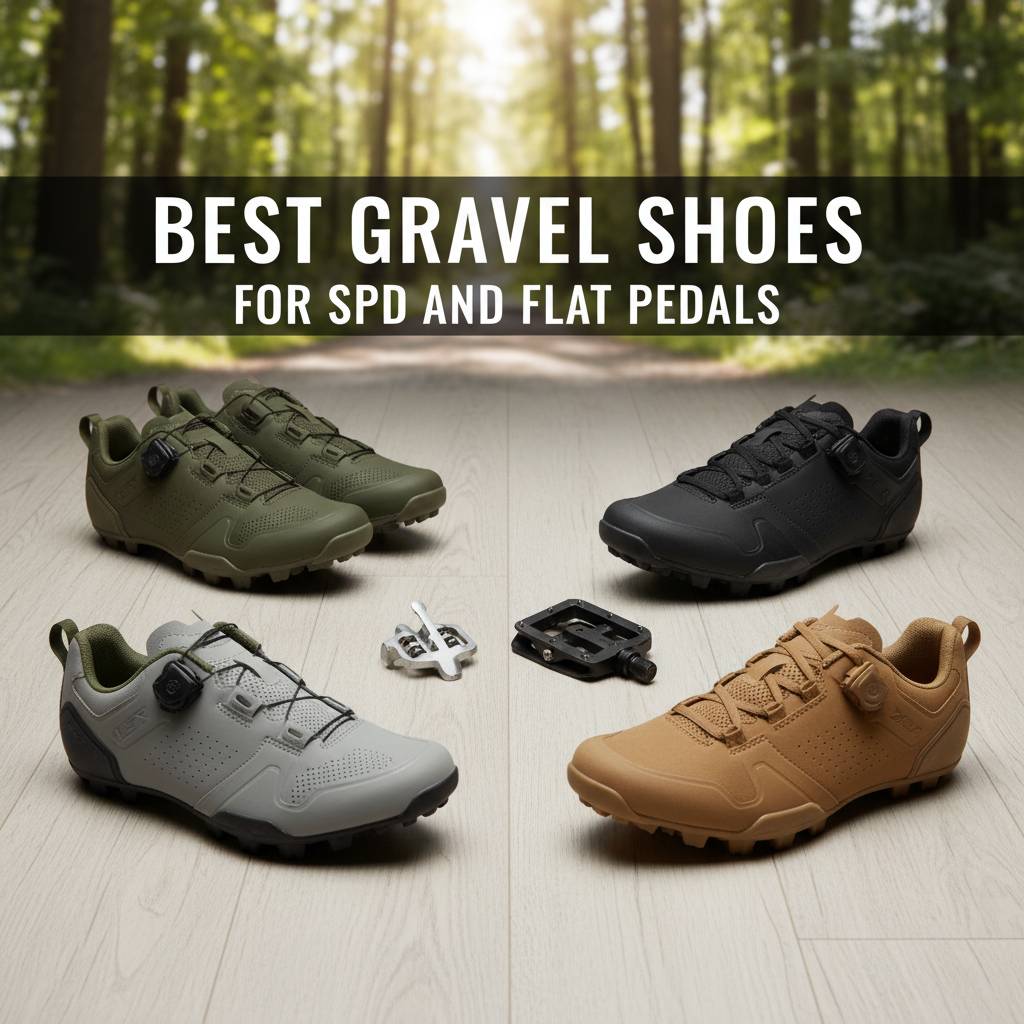
Boa dials: Quick adjustment mid-ride. Popular for good reason.
Traditional laces: Even pressure distribution. Some riders prefer the classic feel.
Velcro straps: Simple and reliable, though less precise than Boa systems.
Extra padding around heels and tongues prevents blisters during those longer rides and walks.
Pedal Compatibility
Most gravel shoes use two-bolt SPD cleats. Mountain bike pedals work perfectly. Some riders prefer shoes compatible with three-bolt road cleats, though recessed cleats make walking easier.
Float matters for knee comfort. More lateral movement in the cleat reduces strain over long distances.
Models Worth Considering
Shimano RX8: Carbon composite sole balancing power transfer with walkability. Boa dial for precise fit.
Giro Ventana: Durable synthetic upper with robust rubber outsole. Known for lasting through abuse.
Specialized S-Works Recon: Lightweight Dyneema upper with carbon sole. Premium option for weight-conscious riders.
Making the Call
Match shoes to your typical terrain. Aggressive tread for loose surfaces. Breathability for heat. Weather resistance for wet climates. Try multiple brands — sizing varies considerably. The right gravel shoes make mixed-terrain riding dramatically more enjoyable.