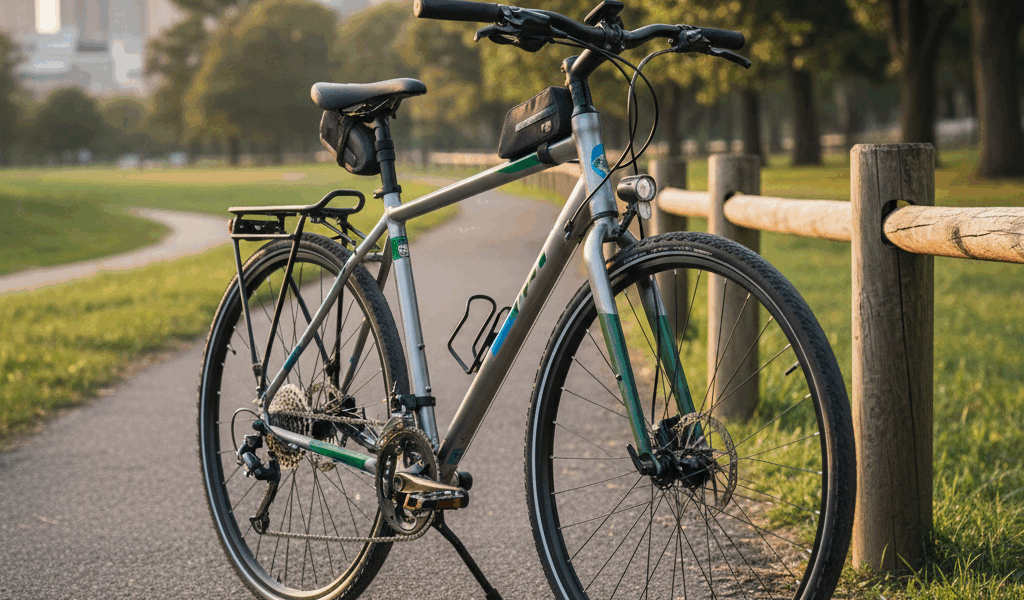
Hybrid Bikes Explained: The Jack-of-All-Trades That Actually Works
When someone asks me what kind of bike they should buy for “getting back into cycling,” I almost always say hybrid. Not because they’re exciting – they’re honestly kind of boring – but because they work for almost everyone.
My sister bought a hybrid three years ago after not riding since college. She still uses it multiple times a week. Meanwhile, I convinced a friend to buy a gravel bike for “versatility” and it’s been hanging in his garage for two years untouched. Sometimes boring and practical wins.
What Even Is a Hybrid?
A hybrid bike is basically a mutt. It steals the flat handlebars from mountain bikes (more comfortable, less intimidating than drop bars), the lighter wheels and narrower tires from road bikes (faster than chunky mountain bike rubber), and the upright seating position from cruisers (easier on your back and neck).
The result is a bike that’s not amazing at any one thing but pretty good at most things. You can commute on it. Ride the bike path. Do some light trails. Explore your neighborhood. Run errands. It’s the Swiss Army knife of bikes.
The Good Parts
Comfortable position: You sit upright, which is easier on your back and lets you see traffic. My partner got a road bike first, couldn’t deal with the aggressive position, switched to a hybrid and is much happier.
Flat handlebars: Way more intuitive than drop bars if you’re not used to them. All the controls are right there. No learning curve.
Versatile tires: Wide enough to handle some bumps and broken pavement, narrow enough to roll reasonably fast. You’re not going to keep up with road cyclists but you’ll be comfortable doing it.
Easy mounting: Lower standover height than road bikes typically, especially in step-through models. Makes getting on and off less of an athletic event.
The Less Good Parts
Not fast: Let’s be honest – if speed is your goal, a hybrid isn’t it. The upright position creates wind resistance, the tires are slower than skinny road tires, and the geometry isn’t optimized for efficiency. I’ve bonked on group rides where I was the only one on a hybrid.
Not great off-road: Despite looking somewhat mountain-bike-ish, hybrids aren’t really trail bikes. Light gravel and packed dirt is fine. Actual singletrack with rocks and roots? You’ll struggle.
Can feel heavy: Many hybrids prioritize durability over weight savings. They’re fine for casual riding but if you’re climbing a lot of hills, you’ll feel it.
Who Should Buy a Hybrid
Be honest about how you’ll actually use the bike:
Yes to hybrid if you want to:
- Cruise bike paths on weekends
- Commute a few miles to work
- Run errands around town
- Get exercise without training for anything specific
- Ride with kids or less athletic family members
Consider something else if you want to:
- Do serious road riding or racing (get a road bike)
- Ride actual mountain bike trails (get a mountain bike)
- Do long gravel adventures (get a gravel bike)
- Go super fast (probably road or aero bike)

What to Look For When Buying
Gears: For flat terrain, you can get away with fewer gears (or even single-speed). Hilly area? More gears help a lot. An 8-speed is probably the minimum I’d recommend for varied terrain.
Brakes: Disc brakes are nice but not essential. Rim brakes work fine if you’re not riding in lots of rain. Don’t let someone upsell you on hydraulic discs for casual bike path riding.
Tires: Stock tires are usually fine. 35-40mm width is typical and works for most uses. You can always swap them later if you want to go wider or narrower.
Frame fit: This is the most important thing honestly. A bike that fits right is comfortable. One that doesn’t will hurt and you won’t ride it. Get measured or at least test ride a few sizes.
Weight: Heavier hybrids feel sluggish. Lighter ones cost more. Somewhere around 25-30 pounds is reasonable. Don’t get too hung up on this unless you’re climbing mountains.
Maintenance Reality Check
Hybrids are pretty low maintenance compared to mountain bikes (no suspension to service) or racing bikes (less finicky components). But they still need basic care:
Keep the chain clean and lubed. Check tire pressure every couple weeks. Look at brake pads a few times a year. Get a tune-up once a year or when things start feeling wrong.
My sister takes hers to the shop once a year for a tune-up and otherwise does nothing to it. Works fine. That’s the hybrid lifestyle.
Quick Buying Guide
Under 400 bucks: Tough to get quality at this price. Used bikes from good brands are better than new bikes from unknown brands at this level.
500-700 bucks: The sweet spot for most people. You’ll get decent components, reasonable weight, and it’ll last for years with basic care.
800-1000 bucks: Nicer components, maybe hydraulic disc brakes, lighter weight. Worth it if you’ll ride frequently.
Over 1000 bucks: Getting into diminishing returns for casual riders. But if you want the best, it’s there.
My hot take: buy from a local bike shop if possible. Yeah, it’s more expensive than online, but they’ll set it up properly, help with fit, and be there when something breaks. Worth the premium for a first bike especially.
Final Thoughts
Hybrids aren’t sexy. Nobody posts their hybrid on Instagram and gets thousands of likes. They’re not going to impress anyone at the coffee shop stop.
But they work. They get people on bikes who otherwise wouldn’t ride. They’re comfortable and practical and require minimal expertise to enjoy. And a bike you actually ride beats an expensive specialty bike collecting dust every time.
If you’re on the fence, go test ride a few. The right hybrid might surprise you with how much fun it is to just… ride a bike without any agenda.
Recommended Cycling Gear
Garmin Edge 1040 GPS Bike Computer – Premium GPS with advanced navigation.
Park Tool Bicycle Repair Stand – Professional-grade home mechanic stand.
As an Amazon Associate, we earn from qualifying purchases.




Stay in the loop
Get the latest wildlife research and conservation news delivered to your inbox.