Bike brakes have gotten complicated with all the disc versus rim debates flying around. As someone who’s run both systems across road, gravel, and mountain bikes over fifteen years, I learned everything there is to know about how each type actually performs. Today, I will share it all with you.
That’s what makes brake selection endearing to us mechanical tinkerers — it’s one area where you can genuinely feel the difference immediately.
The Two Main Categories
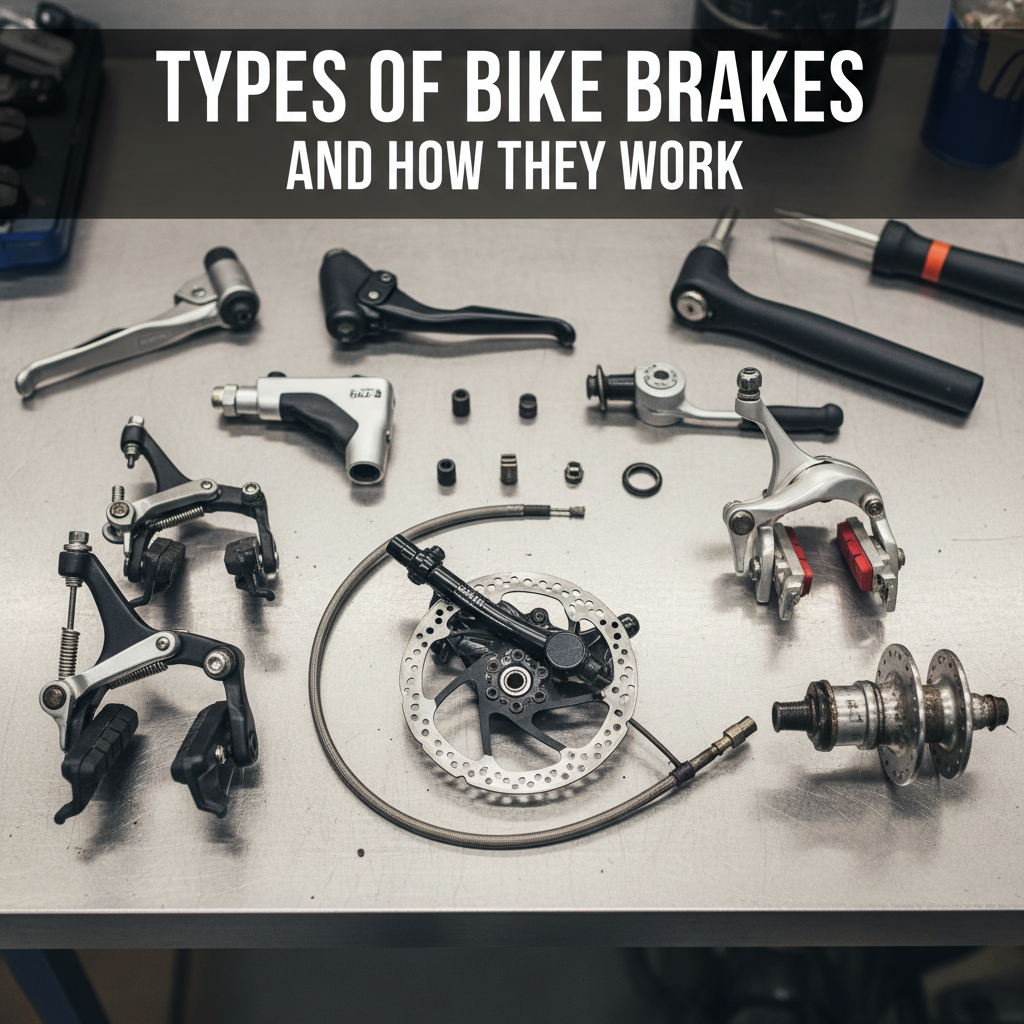
But what is the actual difference between rim and disc brakes? In essence, it’s where the braking surface lives. But it’s much more than that.
Rim brakes squeeze the wheel rim itself. Disc brakes squeeze a rotor attached to the hub. This fundamental difference affects everything — wet weather performance, maintenance, wheel life, and how the brake feels under your fingers.
Rim Brakes: Still Relevant?
Probably should have led with this honestly — rim brakes aren’t dead, despite what the industry wants you to believe.
Caliper brakes: The dual-pivot calipers on most road bikes work beautifully in dry conditions. Light, simple, and easy to maintain. My old steel road bike still runs them. For summer riding on good roads, they’re adequate.
V-brakes: The linear-pull design found on older mountain and hybrid bikes. Excellent stopping power for rim brakes. I ran V-brakes on my commuter for years. Cheap pads, simple cable adjustment, predictable performance.
The limitation is wet weather. When rims get wet, braking power drops dramatically for the first rotation or two. If you’ve ever felt that terrifying moment of pulling the lever and nothing happening on a rainy descent, you understand why disc brakes took over.
Mechanical Disc Brakes
Mechanical discs use a cable to push pistons against a rotor. The rotor stays relatively dry because it’s away from puddles and road spray.
Frustrated by rim brake fade during wet spring rides, I switched my gravel bike to mechanical discs five years ago. The improvement was immediate — consistent stopping power regardless of conditions.
Mechanical discs require adjustment as pads wear. The cable-actuated pistons need periodic attention. But the tools are standard and the process is straightforward. I adjust mine every few months.
Hydraulic Disc Brakes
Hydraulics use fluid instead of cables. The self-adjusting pistons maintain consistent lever feel as pads wear. The modulation — how precisely you can control braking force — is noticeably better.
My mountain bike runs hydraulic Shimano brakes. The difference from mechanical is like comparing power steering to manual. Both work. One requires less effort and offers more control.
The trade-off: bleeding hydraulic systems requires specific tools and fluid. A contaminated or air-bubbled system needs shop attention unless you’re comfortable with the procedure. I’ve learned to bleed my own brakes; it took a couple attempts to get right.
Rotor Sizes
Larger rotors provide more stopping power and better heat dissipation. My mountain bike runs 180mm rotors. My gravel bike uses 160mm. The mountain bike stops harder but weighs more.
For aggressive riding or heavier riders, larger rotors make sense. For road and light gravel use, smaller rotors save weight without compromising safety.
What I Actually Run
- Road bike: Rim brakes (original equipment). Works fine for fair-weather riding. Would upgrade to discs if buying new.
- Gravel bike: Mechanical discs (TRP Spyre). Excellent all-weather performance. Easy maintenance.
- Mountain bike: Hydraulic discs (Shimano XT). The feel is excellent. Wouldn’t go back to mechanical for technical riding.
Making the Call
If you’re buying a new bike, disc brakes are the default for good reason. The wet weather performance alone justifies the slight weight and complexity increase.
If you’re upgrading an older rim brake bike, consider whether your riding conditions demand it. Dry-weather road riders may not benefit enough to justify frame compatibility issues.
Mechanical versus hydraulic comes down to maintenance tolerance. Mechanical is simpler to service yourself. Hydraulic feels better but requires occasional bleeding. Both stop you effectively.
The right choice depends on what you ride, where you ride, and how much you want to wrench on your own bike.