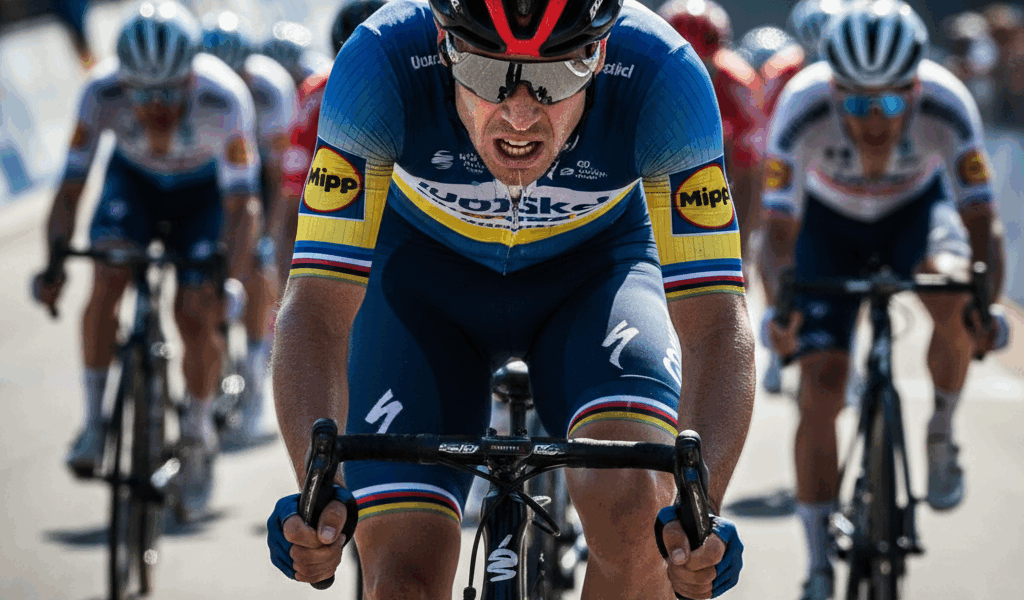
I’ll be honest—I didn’t think much about helmet technology until I went over my handlebars at 28 mph last spring. Walked away with road rash and a cracked Giro. The ER doc looked at my CT scan and said “whatever helmet you were wearing, buy another one.” So yeah, this stuff matters.
But here’s the thing: helmet marketing has gone absolutely bonkers. MIPS! WaveCel! Spherical! Every brand claims their tech will save your brain. Some of it’s legit. Some of it’s… well, let’s just say the cycling industry has never met a technology it couldn’t oversell.
Let me break down what actually works, what’s probably marketing fluff, and what I’d actually spend my money on.
The Brain Injury Thing Nobody Talks About
Here’s something that blew my mind (pun intended, sorry): traditional helmet tests completely ignore how most crashes actually happen.
The CPSC test? They drop a helmet straight down onto a flat surface. Measure the G-forces. Done. Passed. Ship it.
Real crashes don’t work like that. You hit pavement at an angle. Your head rotates. And that rotational force—your brain literally twisting inside your skull—is what causes most concussions. Swedish researchers at KTH figured this out years ago, but the safety standards still haven’t caught up.
So we’ve got millions of helmets on the market that pass all the tests but don’t address the actual injury mechanism. Great.
MIPS: The One That Actually Has Science Behind It
Okay, I’m going to say something controversial: MIPS is probably the only rotation-protection tech with genuinely solid evidence.
The concept is dead simple. There’s a plastic liner inside that can slip about 10-15mm relative to the outer shell. You hit the ground, your helmet rotates, but that slip plane lets the helmet move independently of your skull. Less rotation transferred to your brain.
Virginia Tech’s helmet lab—which is basically the only independent testing anyone trusts—consistently shows MIPS helmets scoring better than equivalent non-MIPS versions. The Annals of Biomedical Engineering published studies showing 40% reduction in rotational forces. That’s not nothing.
The yellow liner adds maybe $20-30 to the price. Worth it? I mean, it’s a few coffees for measurably better protection. I’d say yes.
One annoyance though: that plastic liner can make the helmet feel slightly less stable on some head shapes. I had to size up with my Giro Aether because the MIPS liner changed the fit. Try before you buy.
WaveCel: Great Tech, Questionable Marketing
Trek/Bontrager launched WaveCel claiming “48x reduction in concussion risk” and the cycling world collectively rolled its eyes.
Look, the technology itself is actually clever. Instead of foam, you’ve got this honeycomb-like structure that can flex AND crumple. Handles both rotation and direct impacts in one layer. The engineering is legitimately innovative.
But that 48x claim? It was comparing WaveCel to helmets that didn’t even have rotational protection. That’s like bragging your car is faster than a bicycle. Technically true, completely misleading.
When Virginia Tech tested WaveCel helmets against MIPS helmets, the results were… similar. Good! But not 48x better. Not even 2x better.
The Bontrager Specter WaveCel ($150) is a solid helmet. I just wish they hadn’t torpedoed their credibility with that launch campaign.
POC’s SPIN System
POC does their own thing with silicone pads that shear on impact. Same concept as MIPS—decouple helmet rotation from head rotation—just different execution.
Honestly? Less independent research than MIPS, but POC helmets score well in Virginia Tech testing. The Ventral Air SPIN looks amazing and performs well. It’s also like $275, which, oof.
If you’ve got the budget and like the aesthetic, go for it. If you’re cost-conscious, a $100 MIPS helmet will protect you just as well.
Koroyd: Different Problem, Different Solution
Smith uses these weird thermally-welded tubes instead of foam. They crush on impact rather than compressing and rebounding. Absorbs more energy, great ventilation.
Here’s the catch: Koroyd is primarily for linear impacts. Smith knows this, which is why they combine it with MIPS in most helmets. The Session MIPS with Koroyd is genuinely excellent—I’ve had two friends survive nasty crashes in them.
Just don’t buy a Koroyd-only helmet thinking it handles rotation. It doesn’t.
What I Actually Recommend
After way too much research and one personal crash test, here’s my take:
Best value: Giro Register MIPS ($65-75). It’s ugly. It’s heavy. It’s also 5-star rated at Virginia Tech and protects your brain just as well as helmets costing 4x more. I bought one for my wife.
Best all-around: Specialized Prevail 3 with MIPS ($250). Lightweight, great ventilation, proven protection. It’s what I replaced my crashed Giro with.
Best mountain: Troy Lee A3 MIPS ($160-180). Full coverage, comfortable for long rides, doesn’t cook your head. My buddy who races enduro swears by it.
Skip it: Any helmet over $300 without rotational protection. I don’t care how light it is or how good the ventilation is. A $75 MIPS helmet will protect you better.
The Fit Thing That Matters More Than Tech
I’m going to say something that might undermine this entire article: fit matters more than any of this technology.
A MIPS helmet that’s too big will shift during a crash. A non-MIPS helmet that fits perfectly will protect you better than a loose MIPS one. Physics doesn’t care about your fancy yellow liner if the helmet isn’t where it needs to be.
Go to a shop. Try helmets on. Shake your head around. If it moves, size down or try another brand. Your head shape matters—I’m apparently a “round oval” and most Giro helmets fit me perfectly while Bell helmets feel weird.
The retention system matters too. Those little dials in the back? Actually use them. Tighten until it’s snug but not headache-inducing.
Final Thoughts
Is helmet tech improving? Absolutely. Should you buy a helmet with rotation protection? Yes, probably MIPS unless you have a specific reason to go with something else.
But don’t let marketing convince you that a $350 helmet will protect you dramatically better than a $100 one with the same tech. The diminishing returns kick in fast. Spend the difference on a good pair of cycling shorts or, I don’t know, an emergency room co-pay fund.
Stay safe out there. Wear your helmet. And if you crash, replace it even if it looks fine—those foam structures are one-and-done.


Stay in the loop
Get the latest wildlife research and conservation news delivered to your inbox.