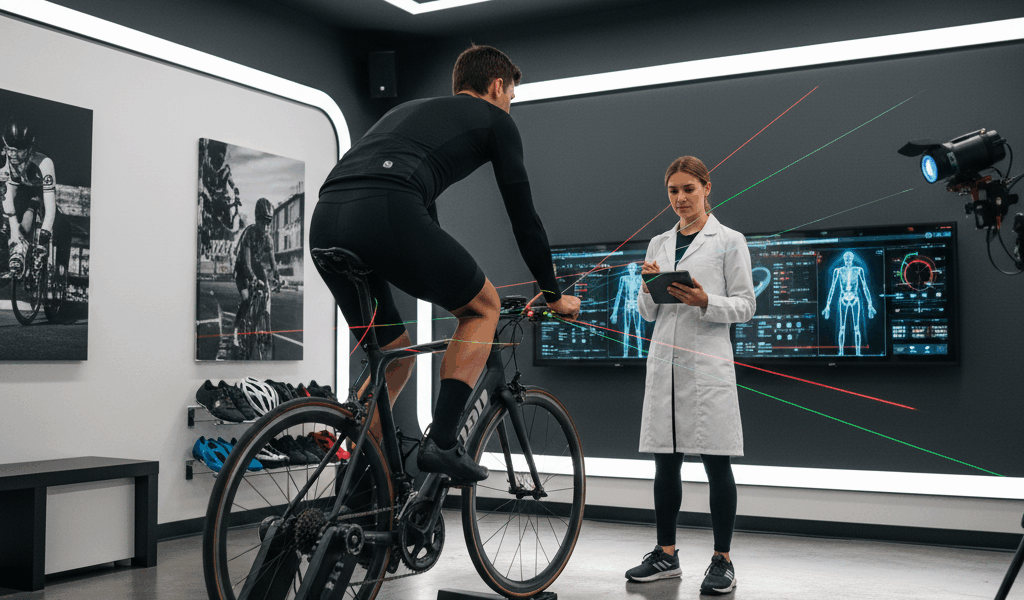
Professional bike fitting has evolved from basic measurements and rules of thumb to sophisticated motion capture and AI analysis. Understanding these technologies helps you choose the right fit approach for your needs and budget.
Why Bike Fit Matters
A proper bike fit affects every aspect of your riding:
- Power output: Optimal position maximizes the force your muscles can generate
- Comfort: Correct positioning prevents numbness, saddle sores, and fatigue
- Injury prevention: Poor fit is the leading cause of cycling-related overuse injuries
- Aerodynamics: Position affects drag, especially important at higher speeds
Studies show that even minor position changes—a few millimeters of saddle height or a degree of cleat rotation—can significantly impact both comfort and performance.
Traditional Fit Methods
Static Measurements
Traditional fits start with body measurements: inseam, torso length, arm length, and shoulder width. These dimensions establish baseline ranges for saddle height, reach, and handlebar width.
Formulas like the LeMond method (inseam × 0.883 = saddle height) provide starting points but don’t account for individual flexibility, pedaling style, or injury history.
Goniometer Assessment
A goniometer measures joint angles while you pedal. Fitters look for knee extension at the bottom of the stroke (typically 25-35 degrees of flexion), knee tracking over the foot, and hip angle relative to the torso.
This hands-on approach remains effective but depends heavily on the fitter’s experience and eye for movement patterns.
Laser and Optical Systems
Retül Fit System
Retül pioneered 3D motion capture for bike fitting. Small LED sensors attach to key body points, and cameras track their movement throughout the pedal stroke. The system calculates joint angles, symmetry between sides, and movement patterns in real-time.
The data is precise and repeatable, allowing before/after comparisons and tracking position changes over time. Retül fits typically cost $250-400 and take 2-3 hours.
Precision Fit by Trek
Trek’s proprietary system combines pressure mapping with motion capture. Sensors in the saddle, pedals, and handlebars show exactly where pressure concentrates, helping address numbness and hot spots that pure motion analysis might miss.
Guru Fit System
The Guru uses a fully adjustable fit bike that can change geometry in real-time while you pedal. This allows instant A/B comparisons between positions without the commitment of changing your actual bike.
AI-Powered Analysis
Artificial intelligence is transforming bike fitting, offering sophisticated analysis at lower price points.
How AI Fitting Works
Modern AI systems use smartphone or tablet cameras to record your pedaling from multiple angles. Computer vision algorithms identify joint positions and track movement frame by frame, achieving accuracy approaching dedicated motion capture systems.
Machine learning models trained on thousands of riders identify inefficient movement patterns and generate position recommendations automatically.
MyVeloFit
A subscription-based platform that analyzes video recorded on your phone. Upload clips from the side and rear, and the AI returns detailed reports on joint angles, symmetry, and recommended adjustments. The $99/year subscription includes unlimited fits and before/after comparisons.
Bioracer Motion
Professional-level AI analysis used by many bike shops. Three synchronized cameras capture motion from multiple angles simultaneously, and the software generates immediate reports. While shops charge $150-250 for sessions, the equipment is more accessible than traditional 3D motion capture.
STAC Performance
Combines AI video analysis with indoor trainer integration. The system can measure actual power changes from position adjustments, showing real-time watts gained or lost as you modify fit.
Home Fitting Options
Not everyone has access to professional fitters, and technology is making self-fitting more viable:
Apps and Software
- Bike Fast Fit: Uses phone camera with angle measurement tools
- MyVeloFit: AI analysis from home videos
- Retül Match: Measures your current position to find matching bikes
Fit Systems for Trainers
Products like the Wahoo Kickr Bike and Wattbike Atom allow position adjustments during rides, letting you experiment with changes and feel their effects immediately.
Limitations of Home Fitting
Self-fitting works for minor adjustments but struggles with complex issues. A professional can identify problems you can’t feel—like compensating for a leg length discrepancy or inefficient pedaling mechanics that waste energy.
What to Expect From a Professional Fit
Pre-Fit Interview
Good fitters spend significant time understanding your history: injuries, riding goals, flexibility issues, and current problems. This context shapes the entire session.
Flexibility and Movement Assessment
Off-bike tests evaluate hamstring flexibility, hip mobility, core stability, and asymmetries between sides. These results inform what positions are realistic for your body.
Cleat Positioning
Often overlooked, cleat position affects knee tracking and power transfer. Fitters check for proper fore/aft placement, rotation, and stack height.
Saddle Selection
Pressure mapping or sit bone measurement helps identify the right saddle shape and width. A saddle that works for one rider may be torture for another.
Follow-Up
Quality fit services include follow-up sessions to fine-tune based on how the new position feels during actual rides.
When to Get a Bike Fit
Consider professional fitting when:
- You experience persistent pain or numbness while riding
- You’re purchasing a new bike (fit the bike before buying if possible)
- Your goals change (from recreational to competitive, or adding time trials)
- You’ve had injuries that affect flexibility or strength
- You want to maximize performance for events
Cost vs Value
Professional fits range from $150-400, while AI-based options cost $50-100. For most cyclists, a single professional fit establishes a baseline, with occasional home-based follow-ups to monitor and adjust as flexibility or fitness changes.
The investment pays dividends in comfort, performance, and injury prevention—factors that affect every mile you ride.


Stay in the loop
Get the latest wildlife research and conservation news delivered to your inbox.