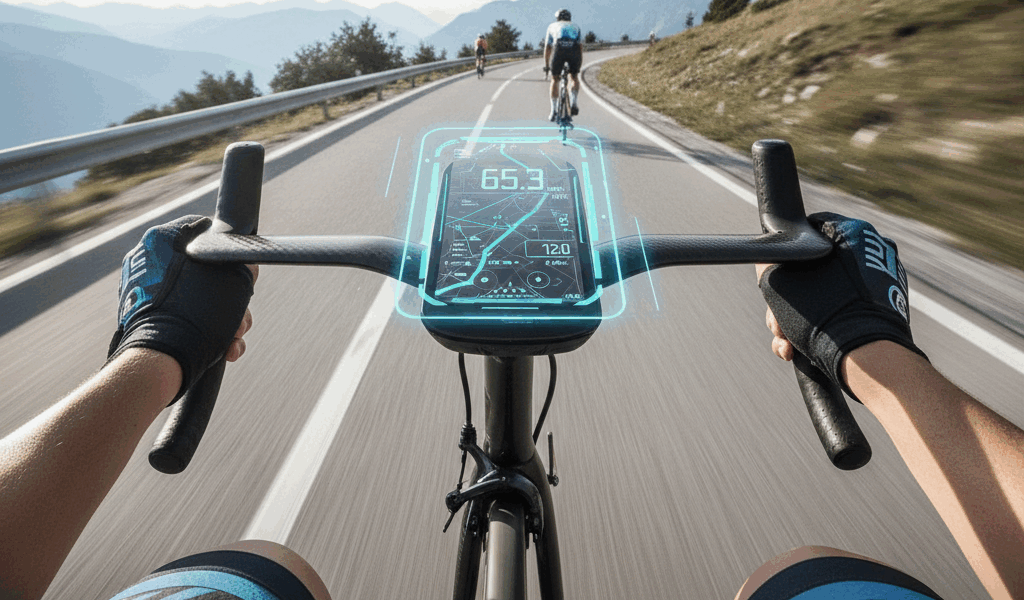
Cycling wearables have expanded far beyond basic computers to include smartwatches, smart glasses, and dedicated head units that track everything from heart rate to power output. This guide compares the leading options across categories to help you find the right tech for your riding style.
Cycling Smartwatches: Best Options
Smartwatches offer versatility—they work on and off the bike, tracking daily activity alongside ride data. For cyclists, the key differentiators are GPS accuracy, battery life, and cycling-specific features.
Garmin Fenix 8 Series
Garmin’s flagship multisport watch offers exceptional cycling features including power meter support, cycling dynamics, and turn-by-turn navigation. The solar charging option extends already-impressive battery life (up to 48 hours in GPS mode). The AMOLED display shows data clearly in any lighting.
Best for: Serious cyclists who also train in other sports and want one device for everything.
Garmin Forerunner 965
A lighter, running-focused alternative that still excels for cycling. Full ANT+ sensor compatibility, navigation, and training load analysis at a lower price than the Fenix line. Battery lasts up to 31 hours in GPS mode.
Best for: Multisport athletes who want premium features without maximum ruggedness.
Apple Watch Ultra 2
Apple’s adventure watch brings excellent build quality and the iOS ecosystem to endurance sports. Native power meter support via Bluetooth, though no ANT+ compatibility limits sensor options. Action button can control ride recording. Battery life remains the weak point at 12 hours with GPS.
Best for: iPhone users who value integration with their Apple ecosystem.
Wahoo ELEMNT Rival
Wahoo designed this watch specifically for triathlon and cycling. Seamless integration with Wahoo bike computers, automatic sport transitions, and a clear, simple interface. While not feature-rich as Garmin, the focus on essentials appeals to riders who don’t want complexity.
Best for: Existing Wahoo users who want seamless ecosystem integration.
Dedicated Bike Computers
Head units mounted on your handlebars offer larger displays, better GPS reception, and easier glance-ability than wrist-worn devices.
Garmin Edge 1050
The latest flagship features a stunning touchscreen, preloaded maps with popularity routing, and every training metric imaginable. New additions include solar charging capability and improved processor speed. It’s the most capable bike computer available, though arguably overkill for casual riders.
Best for: Data-focused riders who want every metric and feature available.
Wahoo ELEMNT ROAM v2
Wahoo’s approach prioritizes simplicity without sacrificing capability. The dual-band GPS provides excellent accuracy, while the companion app makes setup intuitive. Color display shows route and elevation clearly. Physical buttons work reliably in all conditions.
Best for: Riders who want power without complexity.
Hammerhead Karoo 3
Running Android-based software, the Karoo offers smartphone-like functionality including app installations and regular software updates. The display quality is exceptional, and routing features rival Garmin’s best. An increasingly popular alternative to established brands.
Best for: Tech-forward riders who appreciate ongoing software development.
Garmin Edge 540 / 840
Mid-range options that offer core features—GPS, mapping, training metrics—without flagship pricing. The 540 uses buttons; the 840 adds touchscreen. Solar options extend already-long battery life. These represent the sweet spot for most serious cyclists.
Best for: Riders seeking value without major compromises.
Smart Glasses: Emerging Category
Smart glasses bring heads-up displays to cycling, showing data without taking your eyes off the road.
Engo 2
A clip-on heads-up display that attaches to compatible sunglasses. Shows speed, power, heart rate, and navigation arrows in your peripheral vision. Connects to existing bike computers or runs independently with phone GPS. The display is subtle enough to ignore when you don’t need it.
Best for: Riders who want data without looking down at a computer.
Julbo EVAD-1
Purpose-built smart glasses with integrated sensors and heads-up display. More cohesive design than clip-on solutions but limited to Julbo’s lens and frame options. Battery life around 8 hours covers long rides.
Best for: Riders who want an all-in-one integrated solution.
Form Smart Glasses
While originally designed for swimming, Form now offers cycling functionality through software updates. The waveguide display is industry-leading in clarity. Limited third-party integration but excellent basic functionality.
Best for: Triathletes who can use the same glasses for pool training.
Key Features to Consider
Sensor Compatibility
ANT+ remains the standard for cycling sensors, supporting power meters, heart rate straps, cadence sensors, and radar. Bluetooth connectivity is increasingly common but can have pairing issues with multiple devices. Dual-protocol devices offer the most flexibility.
Battery Life
Consider your longest typical ride and add margin for safety:
- 1-2 hour rides: Most devices work fine
- 4-6 hour rides: Watch battery may become limiting
- All-day adventures: Prioritize bike computers or solar options
Navigation Capabilities
Turn-by-turn navigation varies dramatically between devices. Premium bike computers offer full mapping with rerouting; basic devices may only follow pre-loaded routes. Consider how you explore—do you need to find your way home when lost, or do you always follow planned routes?
Training Metrics
Power meter users need devices that record and analyze power data. Training load, recovery advice, and performance predictions require quality algorithms—Garmin and TrainingPeaks integration lead here.
Building Your Wearable Stack
Many cyclists use multiple devices:
- Primary: Bike computer for ride recording and navigation
- Secondary: Smartwatch for daily activity and off-bike training
- Optional: Smart glasses for heads-up display during races
Integration matters—choose devices that sync to the same platforms (Garmin Connect, Strava, TrainingPeaks) to maintain complete training records regardless of which device you use.
Recommendations by Budget
Under $300: Garmin Edge 540 (computer) or Garmin Forerunner 265 (watch)
$300-500: Wahoo ELEMNT ROAM v2 (computer) or Garmin Fenix 7 (watch)
$500+: Garmin Edge 1050 or Hammerhead Karoo 3 (computers)
Start with a quality bike computer if you primarily ride, adding a smartwatch later if you want daily activity tracking and multisport capability.


Stay in the loop
Get the latest wildlife research and conservation news delivered to your inbox.