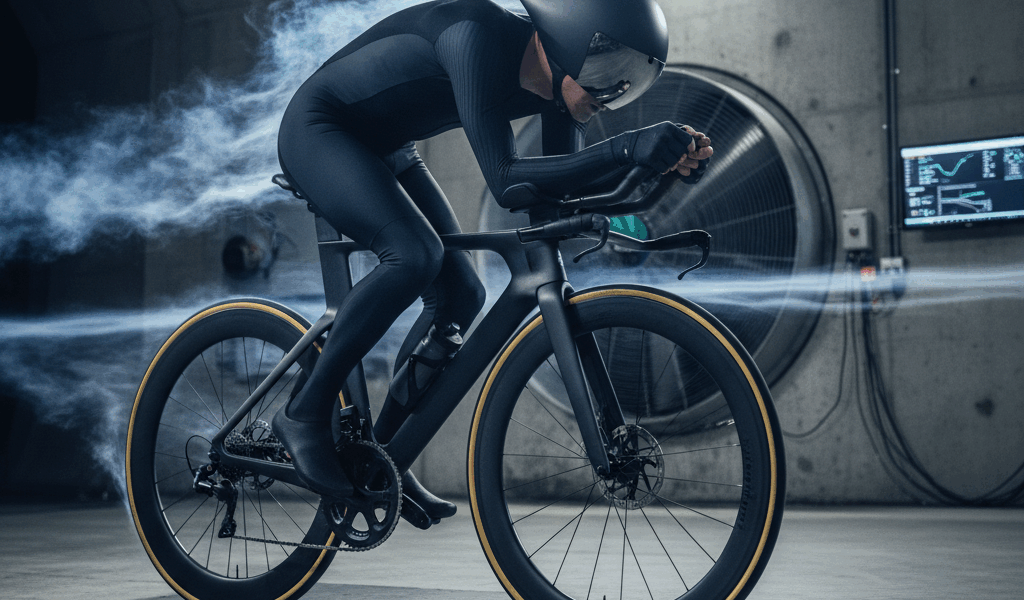
Aero road bikes have transformed competitive cycling, with wind tunnel-tested designs that can save minutes over a typical race distance. But what makes these bikes faster, and do the aerodynamic benefits translate from the lab to real-world riding conditions?
Understanding Aerodynamic Drag
At speeds above 15 mph, aerodynamic drag becomes the primary force working against a cyclist. While the rider accounts for roughly 80% of total drag, the remaining 20% from the bike becomes increasingly important as speeds rise. Aero road bikes target this 20% through carefully engineered tube shapes, component integration, and optimized geometries.
Wind tunnel testing has revealed that traditional round tubes create significant turbulent airflow. Aero bikes use truncated airfoil shapes—essentially teardrop profiles with the tail cut off—to maintain laminar flow around the frame while meeting UCI regulations for tube dimensions.
Key Aero Features on Modern Road Bikes
Frame Tube Shaping
The down tube, seat tube, and head tube receive the most aerodynamic attention since they encounter the most direct airflow. Modern aero frames feature Kamm tail profiles—airfoil shapes truncated at the rear—which provide 90% of a full teardrop’s aero benefit while meeting UCI’s 3:1 aspect ratio rules.
Integrated Cockpits
Handlebars and stems that flow seamlessly into the frame eliminate cable junctions and exposed hardware that create drag. Specialized’s Tarmac SL8, Trek’s Madone, and Cervélo’s S5 all feature proprietary integrated cockpits that route cables internally from the first inch of the bar.
Hidden Brakes and Cables
Disc brakes presented an initial aerodynamic challenge, but manufacturers now integrate calipers behind the fork legs and frame junctions. Internal cable routing has become standard, with some bikes using fully wireless drivetrains to eliminate cable ports entirely.
Seatpost and Saddle Integration
Aero seatposts use D-shaped or airfoil profiles, often with proprietary clamping systems hidden within the frame. Some designs integrate the seatpost directly into the frame, limiting adjustability but maximizing airflow efficiency.
Wind Tunnel vs Real-World Performance
Wind tunnel data provides controlled, repeatable measurements, but real-world conditions introduce variables that can amplify or diminish aero benefits:
Yaw Angle Considerations
Wind rarely hits a rider from directly ahead. At typical outdoor yaw angles of 5-15 degrees, some bikes perform better than others. Manufacturers now optimize for these real-world wind angles rather than pure head-on scenarios. The Trek Madone, for example, was specifically designed to excel at 10-degree yaw.
Rider Position Impact
A bike’s aero efficiency is meaningless if the geometry prevents an aerodynamic rider position. The best aero bikes balance aggressive positioning with comfort, allowing riders to maintain their optimal position for entire races rather than sitting up due to discomfort.
Wheel and Tire Interactions
Deep-section wheels interact with fork legs and frame tubes. Aero bikes are increasingly designed around specific wheel depths, with some manufacturers publishing drag data for various wheel combinations.
Watts Saved: What the Numbers Mean
Marketing claims often cite watts saved at specific speeds. Here’s how to interpret these figures:
- At 25 mph: A 10-watt savings translates to approximately 20 seconds over 40 kilometers
- At 30 mph: The same 10-watt difference saves roughly 30 seconds over the same distance
- In a peloton: Drafting reduces aero benefits by 30-40%, though breakaways and solo efforts see full advantages
Real-world testing by independent outlets like Tour Magazine and Bicycle Rolling Resistance consistently shows top aero bikes saving 15-30 watts compared to traditional race bikes at 28 mph.
Trade-offs of Aero Design
Weight Penalty
Aero frames typically weigh 200-400 grams more than their lightweight counterparts. However, at speeds above 20 mph on flat terrain, aerodynamics saves more time than equivalent weight savings.
Ride Quality
Deep tube profiles can create stiff, harsh rides. Modern aero bikes address this with flex zones in seatstays and seatposts, plus tire clearance for 28-32mm tires that absorb road vibration.
Handling in Crosswinds
Deep-section frame tubes can catch side winds. Most manufacturers now design for stability at yaw angles, but riders in consistently windy conditions may prefer less extreme profiles.
Top Aero Road Bikes in 2026
Current market leaders include:
- Trek Madone Gen 8: IsoFlow technology combines aero efficiency with rear-end compliance
- Specialized Tarmac SL8: Bridges the gap between aero and lightweight categories
- Cervélo S5: Pure aero focus with proven WorldTour race results
- Canyon Aeroad: Direct-to-consumer value with top-tier wind tunnel performance
- Giant Propel: Excellent aero numbers at competitive price points
Is an Aero Bike Right for You?
Aero road bikes make the most sense for:
- Riders averaging 18+ mph on flat to rolling terrain
- Time trialists and triathlon competitors
- Racers in breakaways or criteriums
- Solo riders who don’t benefit from drafting
If you primarily climb, ride in groups, or prioritize comfort over speed, a lightweight or endurance bike may serve you better. But for riders who value straight-line speed and are willing to accept minor trade-offs, modern aero bikes deliver measurable, race-winning advantages.



Stay in the loop
Get the latest wildlife research and conservation news delivered to your inbox.