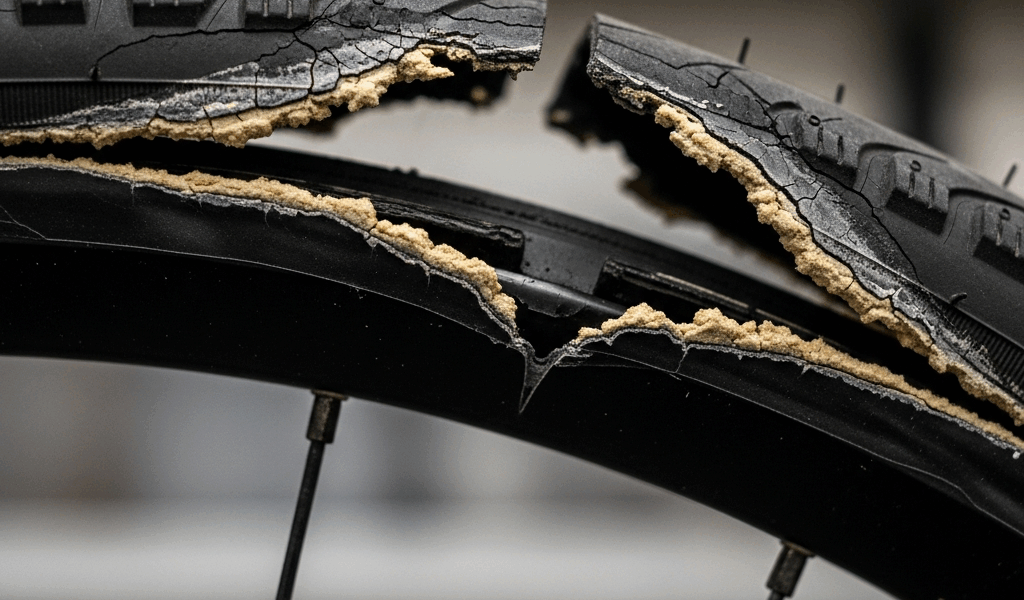
Why Tubeless Tires Fail to Seal in the First Place
Tubeless tires have gotten complicated with all the conflicting advice flying around. You’re standing roadside with a flat, a pump in your hand, and $120 worth of tire sitting there refusing to cooperate. That’s a bad afternoon.
But what is a tubeless seal failure, really? In essence, it’s air escaping from one of three specific zones. But it’s much more than that — most guides treat every leak identically, which is exactly why you end up dumping sealant in three times before realizing your valve core was finger-loose the whole time.
The three zones: the bead-to-rim interface where rubber meets metal, the valve core and valve base, and the rim tape covering your spoke holes. Today, I’ll walk through a diagnostic flow that tells you which failure point to check first. So, without further ado, let’s dive in.
Check the Bead Seal Before Anything Else
The bead is where your tire’s sidewall meets the rim. Also the most common culprit.
Start with the soapy water test. Mix dish soap and water in a spray bottle — I use a cheap 8oz bottle from Dollar Tree, honestly — and spray the entire tire from bead to bead, all the way around. Bubbles form at any leak within seconds. Watch for steady bubble growth, not a single pop. One bubble might just be sealant escaping. Steady bubbling means the seal itself is gone.
If you’re hearing a hiss but soapy water isn’t revealing anything, run a length of vinyl tubing along the bead line and press your ear to the other end. Bead leaks sound different from valve leaks. Quieter. More of a whisper. A stethoscope works too — I picked one up at a garage sale for $3 and it lives in my tool box now.
The sealant spray pattern inside the tire can tell you something too. If residue clusters at one spot, the tire likely shifted post-inflation and lost contact with the rim right there.
Common Reasons the Bead Won’t Seal
Uneven seating happens more than people admit. Before inflating, spin the wheel slowly and watch the bead line all the way around. It should run parallel to the rim. If one side sits higher, deflate completely, push the bead back down into the channel with your thumbs, and start over.
Inflation speed matters more than pressure here. A floor pump can’t surge air fast enough to pop the bead onto the rim seat. That’s what makes CO2 cartridges the preferred tool for stubborn beads — a 16g or 20g cartridge delivers a sudden pressure burst that a hand pump physically cannot replicate. Two quick bursts will seat a bead that twenty minutes of pumping won’t. Compressor users: use the quick-connect feature and aim for 40+ PSI delivered in under 10 seconds.
Lubrication matters too. Dust or dried residue on the tire bead creates friction that fights the seal. Wipe the bead clean with a damp cloth before seating. Don’t make my mistake — I spent 45 minutes in my garage at 9 PM fighting a tire that refused to seat until I noticed a thin dust layer on the bead. One wipe with a damp rag. Done in three minutes after that.
Valve Core and Valve Base Leaks Are More Common Than You Think
Probably should have opened with this section, honestly.
A loose valve core causes roughly a third of the seal failures riders blame on the tire itself. The valve core is the small threaded component inside your valve stem. Vibration, pressure cycling, or a rushed installation — any of those can leave it loose enough to bleed air constantly without anyone noticing until the tire is flat.
Grab a valve core tool. They run $4–8 and fit in any seatpack. Unscrew the core counterclockwise, then thread it back clockwise by hand, then give it one firm half-turn with the tool. Snug. Not stripped.
While you’re there, spray soapy water onto the valve base and the area where the stem threads into the rim. Bubbles there confirm the valve was your leak all along. Also worth knowing: sealant can clog the valve core over time — I’m apparently sensitive to this and Stan’s NoTubes specifically gives me clogged cores every four months while Orange Seal never does that for me. Thicker formulations cure faster inside the valve. If tightening doesn’t fix the leak, the core itself may be damaged. Replace it. They’re $2.
Cleaning a Clogged Valve Without Full Disassembly
Suspect dried sealant blocking the valve? You can flush it without breaking the bead. Remove the core with your valve tool, fill a syringe with thin soapy water, and inject it through the valve hole. You’ll hear it spray inside the tire. Reinstall the core, inflate to 50 PSI, then spray soapy water on the valve again and watch for bubbles. Repeat if needed.
Muc-Off Tubeless and Orange Seal clog valves less than heavier formulations — but all sealants eventually accumulate. Check your bottle. Most brands call for replacement every 3–6 months depending on your climate.
When Rim Tape Is the Real Problem
Rim tape covers the spoke holes and bead channel, keeping air from bleeding out through the rim structure. When it fails, air escapes slowly but relentlessly. That’s what makes tape failures so maddening — they don’t announce themselves.
Look for bubbling under the tape, peeling edges, or sealant seeping from spoke holes on the underside of the wheel. Any of those — the tape failed.
Tape width matters here. Measure your rim’s internal width. The tape should run 1–2mm narrower than that measurement. Too narrow and it won’t cover the full channel. Too wide and adhesion suffers. A 25mm internal width rim needs 23mm tape. Not 25mm.
Re-Taping Step by Step
- Deflate and break the bead on both sides by pressing the tire sidewall down all the way around the rim. Both sides, fully unseated.
- Remove the old tape using a plastic scraper or expired credit card. Metal scratches the rim. Work slowly — old tape leaves adhesive residue that needs rubbing alcohol and a cloth to fully clear.
- Clean the entire rim channel with isopropyl alcohol. Dry it completely. Any moisture left behind will kill the new tape’s adhesion before you even finish.
- Start at the valve hole. Either cut a small notch in the tape where the valve sits, or overlap the tape across the hole, press it down firmly, and punch it back open with a ballpoint pen. That’s what I use — a cheap Bic from the junk drawer.
- Apply tape in one continuous spiral, overlapping about 5mm per rotation. Use a bone folder or old credit card to press it firmly into the channel as you go. Corners and edges need extra pressure.
- Once fully taped, inflate to just 20 PSI and check with soapy water. The tire doesn’t need to be fully seated yet — you’re testing the tape, not the bead.
Adding Sealant the Right Way When Nothing Else Works
Bead checks out. Valve checks out. Tape checks out. That leaves sealant quantity or condition as the culprit.
Old sealant has to come out before fresh sealant goes in. Dried latex clogs the valve and blocks new sealant from spreading across the interior. Deflate, break the bead, pull the tire off the rim, pour out all visible sealant. If the tire has been sitting more than two months, rinse the inside with water. Stuff a towel in there for 10 minutes. Let it dry completely.
Volume by tire size: road tires need 60–90ml, gravel and cyclocross tires need 90–120ml, mountain bike tires need 120–180ml depending on width. Under-sealing guarantees failure. Over-sealing wastes product and can cause minor wheel imbalance — but it won’t prevent sealing.
Installation Method
While you won’t need a full workshop setup, you will need a syringe with a valve core tool adapter. Remove the core, attach the syringe, inject sealant through the valve hole, and reinstall the core immediately. Inflate to 25 PSI, then rotate the wheel constantly for 10–15 minutes — or just ride it at moderate speed. That agitation is what coats the interior evenly. Skip it and the sealant pools at the bottom, leaving the bead zone unprotected.
Give it 15 minutes minimum before testing. Most sealants activate within 5 minutes, but internal curing takes longer. That is because the latex needs time to build up a consistent film across the tire’s surface, not just plug the obvious gaps. Ride it regularly after that — sealant particles stay suspended longer with consistent movement, which means the seal holds longer between top-ups.

Stay in the loop
Get the latest cycle tech trends updates delivered to your inbox.